Super Eagles 2026 World Cup Qualifiers: NFF’s Failures and Nigeria’s Fading Hopes
Super Eagles 2026 World Cup Qualifiers: NFF’s Failures and Nigeria’s Fading Hopes
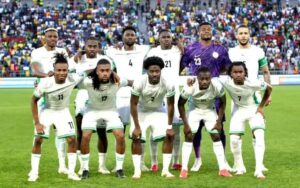
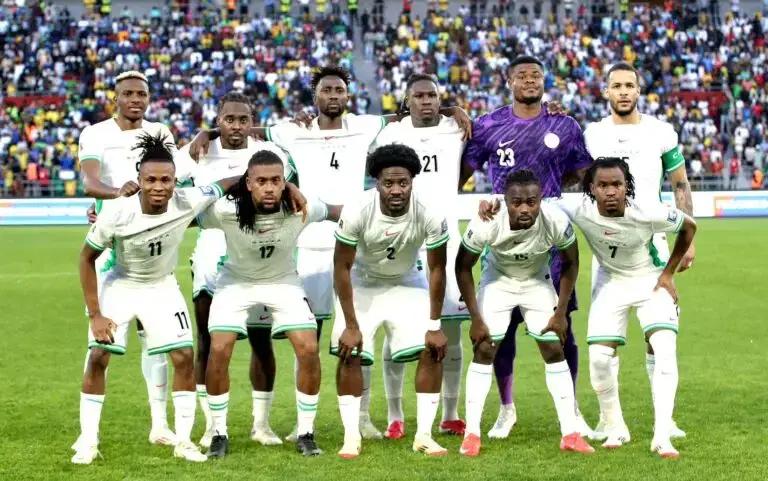
Nigeria’s Super Eagles have slipped one spot to 45th in the latest FIFA world rankings, underscoring the current struggles in the nation’s football. The decline has heightened fears over their shaky quest to secure a place at the 2026 FIFA World Cup. This marks their lowest ranking in five years, with African champions Côte d’Ivoire edging ahead into 44th place.
A general sense of frustration pervades the land. The fans are despondent and stakeholders are wondering what dragged Nigeria football to this level of continental and global insignificance. It’s almost certain to suggest that for the second consecutive World Cup, the Nigerian flag won’t be fluttering among other nations’ in the skies of Canada, Mexico and the USA, when the next edition of the Mundial kicks off next year. For Nigeria, a country that had built a frightening reputation in global football to miss two successive World Cup tournaments, even with the expanded format leaves much to be desired.
Little wonder therefore that calls for a total overhaul of the Nigeria Football Federation are growing louder by the day as the Super Eagles performance in the qualifiers is a direct index of the amount of professionalism – or lack of it, put in by those running football in the country.
Nigeria’s 2026 World Cup qualifying campaign began with a 1-1 home draw with Lesotho, a 1-2 loss to the Republic of Benin in Ivory Coast, and a victory against Rwanda 2-0 in Kigali.
Back at Uyo they drew 1-1 with Zimbabwe and a win against Rwanda and another back-breaking 1-1 draw with South Africa. That draw left Nigeria’s qualification hope hanging in the balance.
South Africa tops the group with 17 points, pending FIFA’s decision on their controversial use of an ineligible player. The Cheetahs of Benin are next on 14 points while Nigeria and Rwanda are on 11 points but the Super Eagles have a superior goal difference. Even if FIFA deducts points from the Bafana Bafana, Benin might turn out the likely beneficiary. So, Nigeria’s only hope lies in picking the second spot. Yet there is no guarantee that the Eagles can achieve that as South Africa are still very strong contenders for the World Cup ticket.
Apart from competition from their group, there are numerous second-placed teams in other groups with higher points than the Super Eagles. Only four will be chosen for the playoff.
Another major setback for Nigeria in the World Cup qualifiers has been the quality and commitment of its players. Despite boasting an entirely foreign-based squad, the Super Eagles have struggled against teams like Benin Republic, Lesotho, and Rwanda—opponents that should not ordinarily pose a challenge. Even South Africa’s Bafana Bafana, many argue, should not trouble a typical Nigerian team.
Speaking with Sports Vanguard, former First Bank Football Club of Lagos player, Jide Oloyede, described Nigerian players as overrated. “Our players are overhyped. Look at how South Africa played—with hunger and determination. They dropped back quickly when they lost the ball and fought hard to win it back. I don’t think we were ready for what we faced,” he said.
Oloyede also questioned the players’ dedication to the national team. “We all remember when we had the likes of Jay-Jay Okocha, Rashidi Yekini, Finidi George, and Sunday Oliseh. Those players fought hard to make a name for themselves. Today’s squad lacks that seriousness. The moment they arrive, you can tell they’re not focused. This is not a coaching issue but a players’ problem. They’re well-motivated, but they don’t put in the same effort for Nigeria as they do for their European clubs. The drive to win simply isn’t there when they wear the national colours,” he added.
However, another perspective presented by Omonode points the finger at the Nigeria Football Federation (NFF). He argued that poor administration has also demoralized the players, citing unpaid bonuses, camp allowances, and poor welfare as issues undermining team spirit. “Administration reflects on the players because they are the end products. For instance, Victor Osimhen is injured in Turkey and Ola Aina in the UK—has anyone from the NFF gone to check on them? Has anyone monitored their recovery? These players need to feel valued. From the moment fixtures are announced, you should engage them, discuss strategies, and show concern. But you can’t call on players when you still owe them allowances and bonuses. That lack of moral standing weakens the bond between the team and the federation,” he said.
As Nigeria reflects on these missed opportunities, it has become clear that urgent reforms are needed. Stakeholders in Nigerian football must act decisively to restore discipline, accountability, and commitment if the nation is to revive its footballing pride.