House of Reps Speaker: National Assembly Backs Tinubu’s Borrowing Policy
House of Reps Speaker: National Assembly Backs Tinubu’s Borrowing Policy
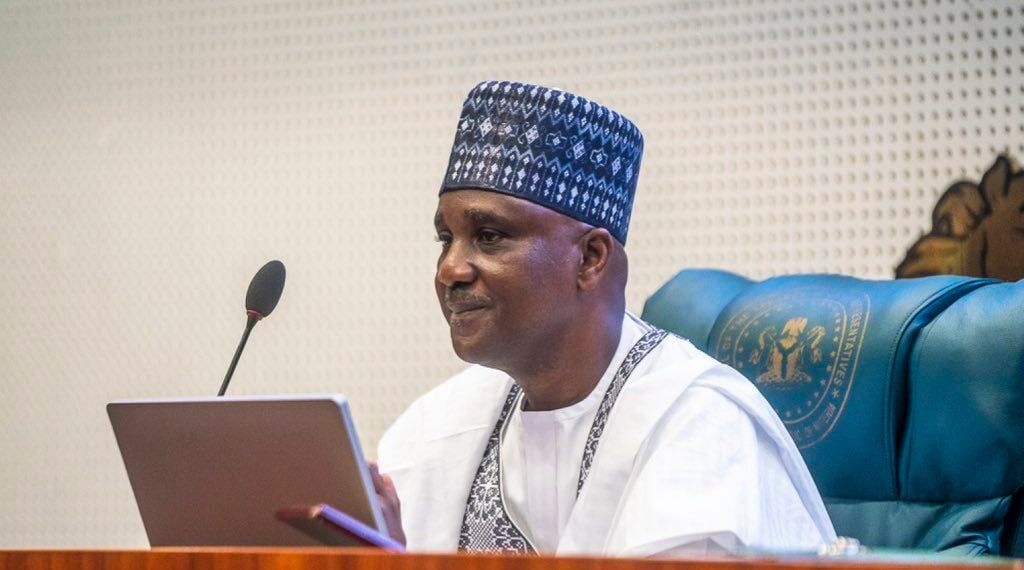
The Speaker of the House of Representatives, Abbas Tajudeen, has stated that the National Assembly is not against President Bola Tinubu’s borrowing policy, stressing that lawmakers view borrowing as a legitimate means of financing infrastructure and promoting sustainable development.
Abbas made this known on Monday in Abuja while delivering the keynote address at the 8th Annual African Network of Parliamentary Budget Offices Conference, organised by the National Assembly in collaboration with the National Assembly Budget and Research Office.
The conference, themed “The Role of PBOs in African Parliaments’ Fiscal Oversight: Contribution to the African 2063 Development Agenda,” provided the platform for his clarification.
His comments came in response to media reports suggesting that parliament was uneasy with the government’s debt approach, following concerns raised at the 11th Annual Conference of the West Africa Association of Public Accounts Committees over Nigeria’s debt-to-GDP ratio, which stands at 52 per cent — above the statutory ceiling of 40 per cent.
Abbas said the reports misrepresented the House’s position.
“A speech delivered by the House Leader at the West Africa Parliamentary Conference was mischievously reported out of context, creating the wrong impression that the House of Representatives rejects President Tinubu’s borrowing plan. Such an interpretation is inaccurate and misleading,” he said.
The Speaker stressed that borrowing, when carefully applied, remains a globally recognised fiscal instrument. He explained that the President had assured parliament that new loans would remain within the country’s medium-term debt framework and international best practices.
According to him, proceeds from fresh borrowings are being channelled into priority sectors such as power, transportation, and agriculture — areas expected to boost productivity, expand revenue, and reduce poverty.
“The House is solidly behind the President’s vision of deploying judicious borrowing as a catalyst for development and poverty alleviation, while we strengthen parliamentary oversight,” Abbas emphasised.
The Speaker also drew attention to Africa’s fiscal vulnerabilities, warning that Nigeria loses about $18 billion annually to financial crimes — nearly 3.8 per cent of its GDP. Across the continent, the figure stands at $587 billion, driven largely by corruption, illicit financial flows, and systemic inefficiencies.
“These leakages undermine our ability to deliver social services. If properly harnessed, these resources could transform education, healthcare, and infrastructure in Africa,” he said.
Abbas added that with Africa’s population now at 1.4 billion — one-sixth of the global total — Nigeria must take the lead in steering the continent toward sustainable growth.
He noted that Nigeria’s GDP stood at $477bn in 2022 but warned that entrenched poverty, high youth unemployment, and sluggish job creation could push the continent into crisis if unaddressed.
In a goodwill message, AN-PBO Chairperson, Prof. Dumisani Jantjies, commended Nigeria for pursuing tough economic reforms that delivered a 3.4 per cent growth rate in 2024 — the strongest in a decade. However, he cautioned that inflationary pressures and rising poverty remained major threats.
Jantjies highlighted the crucial role of robust Parliamentary Budget Offices across Africa, describing them as essential for promoting fiscal transparency, accountability, and aligning public spending with the African Union’s Agenda 2063 vision of “the Africa we want.”
The Abuja conference served as a forum for African parliaments to share experiences and enhance oversight mechanisms aimed at achieving the continent’s long-term development objectives.