INEC: Yakubu explains reasons for exit, highlights key achievements
INEC: Yakubu explains reasons for exit, highlights key achievements
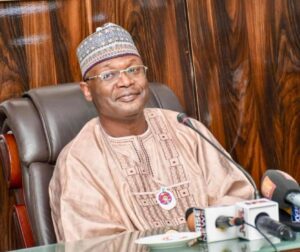
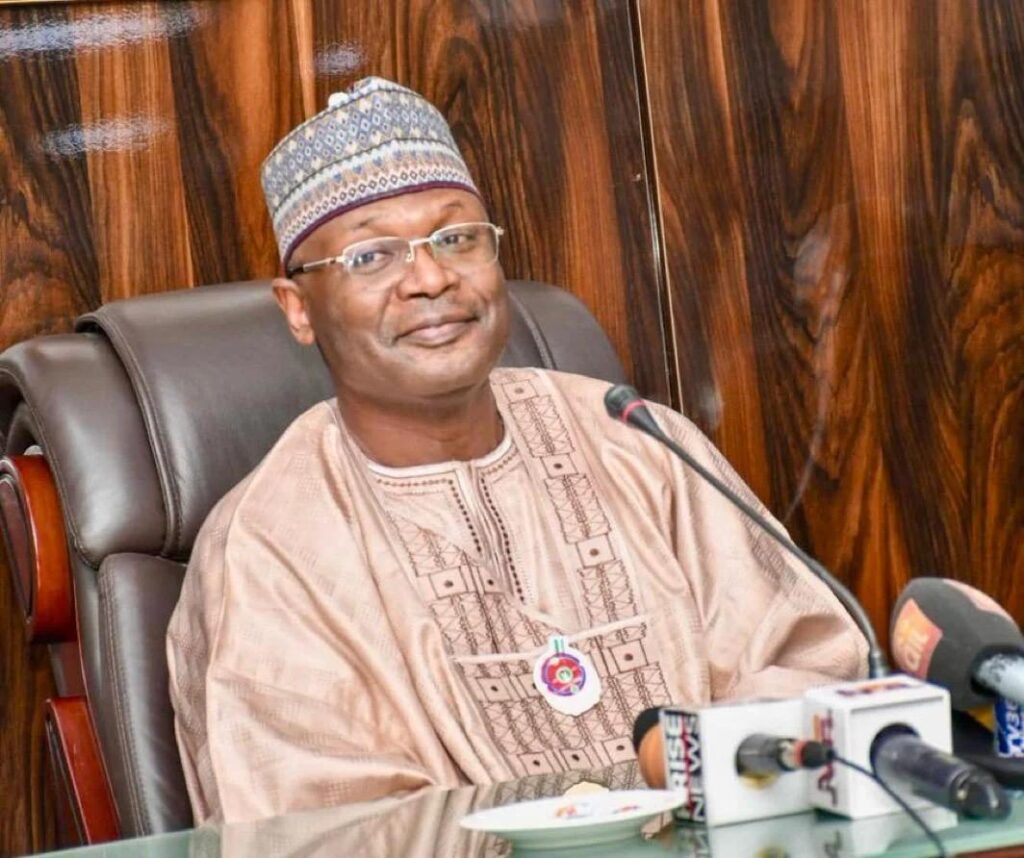
Professor Mahmood Yakubu has explained his decision to step down as Chairman of the Independent National Electoral Commission (INEC), outlining his reasons and reflecting on his accomplishments over nearly a decade in office.
Yakubu stated that his resignation was intended to allow for a smooth leadership transition and the appointment of a new chairman to lead the Commission forward.
On Tuesday, he formally handed over to National Commissioner May Agbamuche-Mbu, who will serve as Acting Chairman pending the appointment of a substantive replacement. The brief handover ceremony took place during INEC’s regular consultative meeting with Resident Electoral Commissioners (RECs) at the Commission’s headquarters in Abuja.
According to Yakubu, his decision was guided by the need to ensure continuity and efficiency in the Commission’s operations, particularly in the conduct of future elections. “Having served for 10 years, with only a few weeks left in my tenure, I believe stepping aside now will allow my successor to settle quickly into the task of managing elections and other electoral activities,” he said.
He further explained that the move was made in line with Section 36, Subsections 1 and 2 of the 1999 Constitution (as amended). “In the interim, and following consultations with other national commissioners, Ms. May Agbamuche-Mbu—one of the most senior commissioners by date of appointment—will serve as Acting Chairman,” he announced.
Yakubu expressed gratitude to INEC officials and Resident Electoral Commissioners for their cooperation and dedication throughout his tenure. He noted that since assuming office in 2015, he had worked with 24 national commissioners and 67 RECs, acknowledging their collective efforts in strengthening Nigeria’s electoral process.
He said that he would forever cherish the support of successive secretaries and staff of INEC nationwide.
“Together, we innovated and managed the commission’s enormous responsibilities, sometimes on the verge of breaking down,’’ he recalled.
Yakubu also appreciated the support of the National Assembly, political parties, the National Peace Committee, civil society, the media, the labour unions, security agencies, National Youth Service Corps and other stakeholders.
“Above all, I thank Nigerians for their comments as well as criticisms which encouraged rather than discouraged us to persevere,’’ he said.
He noted that over the years, INEC, under his watch, achieved a lot in responding to challenges and introducing many innovations.
Yakubu added that the commission also consolidated the biometric register of voters and replaced many of INEC’s manual processes with digital platforms and applications.
These, according to him, include the nomination of candidates, submission of polling and collation agents by political parties, accreditation of national and international observers, and the media for elections, voter accreditation and result management.
He added that with the support of development partners, INEC had introduced various technologies to improve diverse aspects of election management, such as the easy location of election facilities.
Others were management of collation and returning officers, virtual training of electoral staff, management of political parties’ finances and audits as well as the overall monitoring of elections using our Election Monitoring and Support Center, (EMSC).
Yakubu said while tremendous progress was made under him, a lot more still needed to be done.
He stated that the commission was already preparing for Anambra governorship election holding in November and the FCT Area Council election as well as Ekiti and Osun governorship elections in 2026.
He said that in addition to those off-cycle elections, INEC already commenced preparations for some of the major activities for the 2027 general elections, while awaiting the enactment of a new Electoral Act.
“The bill is currently before the National Assembly. It is expected that electoral reforms contained in the new act will necessitate further review of our regulations and guidelines, as well as the manuals for elections.
“Beyond these reviews, the commission needs to further clean up the voters’ register, review the locations of some of the polling units, and allotment of voters to them.
“The management of party primaries is another major area of activity. You may recall that for the last general election in 2023, the Commission processed the nomination of over 20,000 candidates.
“Furthermore, election logistics involving the procurement, production and transportation of huge quantities of materials by road, by air and by sea are monumental undertakings,’’ he said.
In her brief response, the acting INEC chairman, Agbamuche-Mbu, commended Yakubu for setting high record during his tenure as the commission’s chairman.
“We acknowledge the significant contributions and achievements made by Yakubu during his tenure, in particular his hard work and dedication in serving our country meritoriously.
“We wish you God’s guidance in your future endeavours. As you step down, we pray for greater success in whatever you set out to do.
“We are confident that history will judge you very well,’’ she said.
Agbamuche-Mbu assured Yakubu that the commission would do its best to maintain and uphold the standards he had set.
“I pledge to uphold the integrity of the Commission and to carry out my duties with the highest level of professionalism, dedication, and unity alongside the Honourable Commissioners, Resident Electoral Commissioners (RECs), directors, and all INEC staff nationwide,” Agbamuche-Mbu stated.
The Acting Chairman also assured stakeholders of her commitment to collaboration and transparency in advancing the Commission’s work and strengthening Nigeria’s electoral system.
A key highlight of the handover ceremony was the presentation of two publications titled “Election Management in Nigeria 2015–2025”—a compendium documenting INEC’s activities over the past decade—and “Electoral Technology 2015–2025.”
Professor Yakubu formally signed and handed over his official documents to Agbamuche-Mbu, marking the conclusion of the transition ceremony.