Oyo Muslims Reject Terrorists’ Sharia Demand as Schools Shut Over Abducted Pupils, Teachers
Oyo Muslims Reject Terrorists’ Sharia Demand as Schools Shut Over Abducted Pupils, Teachers
The Muslim community in Oyo State has distanced itself from terrorists demanding the implementation of Sharia law as part of conditions for the release of teachers and pupils abducted from schools in Oriire Local Government Area.
The group described the kidnappers’ demands as criminal and contrary to Islamic teachings, insisting that the perpetrators do not represent Islam or the Muslim faithful.
The abductors had attacked three schools in the Esinele, Yawota and Alawusa communities on May 15, reportedly demanding the release of detained terrorist commanders, payment of ransom, two Hilux vehicles and the implementation of Sharia-related law before freeing the captives.
In a statement jointly signed by its Chairman, Alhaji Ishaq Sanvni, and Secretary-General, Alhaji Murisiku Siyanbade, the Muslim community condemned the demands and rejected attempts to justify the abduction through religion.
“Islam forbids kidnapping, terrorism and the extortion of innocent citizens. Legitimate Sharia promotes justice, peace and the sanctity of human life, values that stand in direct opposition to the activities of criminal groups,” the statement said.
“Terrorists do not represent Islamic values and cannot speak for Muslims,” it added.
The group urged security agencies to intensify efforts to secure the release of the victims.
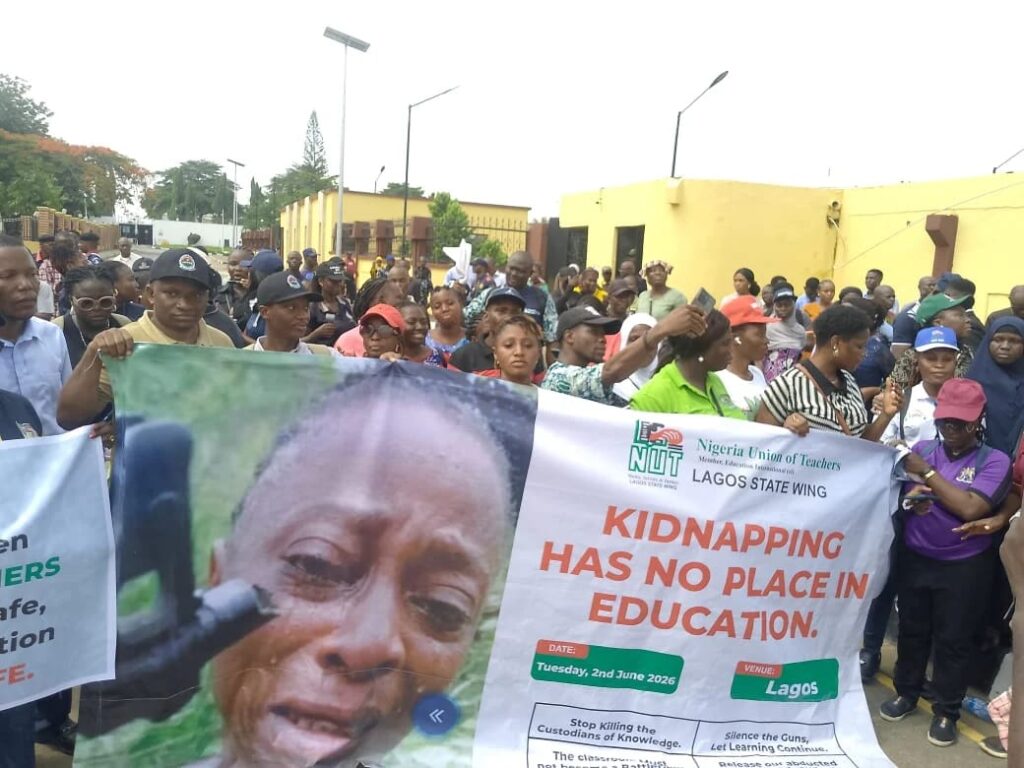
As concerns grow over the fate of the abductees, schools across Oyo State’s 33 local government areas have shut down in solidarity with the victims and to demand urgent action from authorities.
Private school operators directed schools to close on Friday, while the state chapter of the Nigeria Union of Teachers had earlier announced the closure of public primary and secondary schools until the abducted pupils and teachers are rescued.
A traditional ruler in one of the affected communities, the Eleshi of Esiele, Oba Tajudeen Abioye, appealed to the government to intervene.
“We are aware of the ransom demands of the terrorists, but we are helpless. We are looking up to the government and pleading for intervention,” he said.
Meanwhile, investigations revealed that two of the terrorist commanders whose release is being demanded are Mahmud Usman, also known as Abu Bara’a or Abbas Mukhtar, and his deputy, Abubakar Abba, alias Isah Adam or Mahmud Al-Nigeri.
The duo, said to be leaders of Jama’atu Ansarul Muslimeena Fii Bilaadis Sudan (Ansaru), a breakaway faction of Boko Haram, were arrested in 2025 and are currently facing terrorism-related charges before the Federal High Court in Abuja.
Security experts who spoke on the development expressed differing views on how the government should respond to the demands.
A retired Brigadier-General, Bashir Adewinbi, described the situation as a dilemma, warning that paying ransom or releasing terrorist commanders could embolden criminal groups and worsen insecurity.
Another retired military officer, Peter Aro, urged the government to first obtain proof that the abductees are alive while intensifying efforts to rescue them.
Also, retired Major General Segun Fatola argued that Nigeria should adopt tougher measures against terrorism, insisting that negotiations and attempts at deradicalisation had failed to curb the menace.
Similarly, the Executive Director of the Foundation for Peace Professionals, Abdulrazaq Hamzat, advised the Federal and state governments against negotiating with terrorists.
“Terrorist groups strategically deploy kidnapping, propaganda and fear to extract financial and political concessions. Yielding to such demands creates a dangerous precedent that encourages further attacks,” he stated.
Hamzat called for intelligence-led rescue operations, stronger surveillance and efforts to disrupt ransom payment channels and terrorist financing networks.
Despite growing public concern, the Oyo State Government has remained silent on whether negotiations are ongoing.
The Commissioner for Information, Dotun Oyelade, said disclosing the government’s strategy could jeopardise efforts to secure the release of the victims.
“It is unhelpful for us to state our strategy or what is transpiring now. It is unfair to the process; it is equally unfair to the victims and everyone concerned who wants the best possible outcome from this sad situation.
“So, we are not ready to talk because it would be very unhelpful. The important thing is that when people see the outcome, they will be in a better position to judge. It is not for us to tell the public or give a blow-by-blow account of what we are doing, and we apologise for that.”