Court Nullifies NYSC Skirt Ban for Female Corps Members
Court Nullifies NYSC Skirt Ban for Female Corps Members

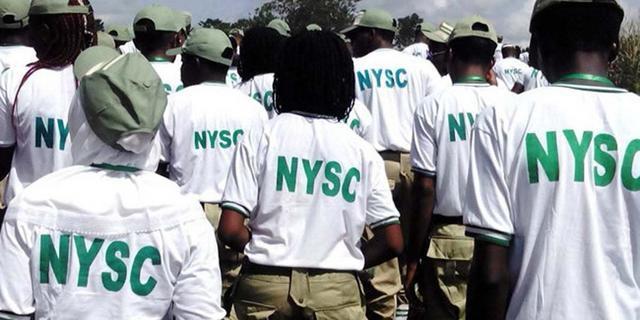
The Federal High Court in Abuja has ruled that the National Youth Service Corps (NYSC) policy prohibiting female corps members from wearing skirts in accordance with their religious beliefs is unconstitutional and infringes on their fundamental rights to freedom of religion.
Delivering the judgment on June 13, 2025—according to a Certified True Copy obtained on Sunday—Justice Hauwa Yilwa declared that the NYSC’s insistence on trousers as the only approved uniform for women violates the constitutional rights to religious freedom and human dignity.
The case stemmed from two separate suits filed by former corps members, Miss Ogunjobi Blessing and Miss Ayuba Vivian, which were later merged due to their similar legal grounds.
In the suits, marked FHC/ABJ/CS/989/2020 and FHC/ABJ/CS/988/2020, the applicants argued that being required to wear trousers went against their Christian convictions, referencing Deuteronomy 22:5—a scripture they interpret as forbidding women from wearing clothing traditionally worn by men.
The applicants, in their separate suits, had sought the enforcement of their fundamental rights to freedom of religion, alleging that these rights had been violated by the respondents.
Listed as respondents in the suits were the National Youth Service Corps and the Director-General of the NYSC.
Their applications were brought pursuant to Order 11, Rules 1–5 of the Fundamental Rights (Enforcement Procedure) Rules 2009; Sections 38 and 42 of the Constitution of the Federal Republic of Nigeria 1999 (as amended); Articles 2, 5, 6, 8, 10, 17, and 19 of the African Charter on Human and Peoples’ Rights; and under the inherent jurisdiction of the court.
They sought the following reliefs, “A declaration that the refusal of the NYSC to recognise and allow skirts as part of the NYSC uniform constitutes a breach of the applicant’s right under Section 38(1) of the 1999 Constitution (as amended), as well as Deuteronomy 22:5 of the Bible, and a misinterpretation of Schedule 2, Article 1(I)(a) of the NYSC Bye-Laws 1993.
“A declaration that the use of skirts by the applicant in the NYSC scheme forms part of her fundamental rights to freedom of religion and to manifest the same in practice and observance as provided for in Section 38(1) of the 1999 Constitution (as amended).
“A declaration that the harassment, embarrassment, and humiliation suffered by the applicant at the hands of NYSC officials constitute a clear infringement of her rights to freedom of religion and to manifest the same in practice, as well as the right to human dignity and protection from degrading treatment.
“An order compelling the respondents, their servants, agents, privies, or anyone acting on their behalf, to recognise, allow, and provide skirts for the applicant or any female corps member wishing to wear same in accordance with Section 38(1) of the 1999 Constitution (as amended) and Deuteronomy 22:5”.
They also demanded damages for N10m and any such further order(s) as the court may deem fit to make in the circumstances.
The court, in its decision, held that the NYSC’s insistence on trousers not only infringed on the applicants’ right to manifest their religion under Section 38(1) of the 1999 Constitution (as amended), but also subjected them to undue harassment and degrading treatment.
Justice Yilwa, in a ruling, granted all the reliefs sought by the applicants and issued identical orders in both cases:
The court issued a declaration that the NYSC’s refusal to allow female corps members to wear skirts for religious reasons is unconstitutional.
It also ordered the NYSC to officially recognize and permit the use of skirts for female corps members who have genuine religious objections. Additionally, the court directed the NYSC to recall the affected former corps members and issue them their certificates.
Justice Hauwa Yilwa ruled that the harassment, embarrassment, and humiliation suffered by the applicants at the hands of NYSC officials amounted to a clear violation of their fundamental rights, including their right to religious freedom and expression.
While the applicants had each demanded ₦10 million in damages, the court awarded ₦500,000 to each as compensation, deeming it sufficient under the circumstances.
The judgment emphasized that preventing the applicants from completing their national service due to their choice of attire constituted religious discrimination.
“The respondents’ actions led to the embarrassment and humiliation of the applicants, which is a blatant infringement of their fundamental rights,” Justice Yilwa stated.