Critical Gas Crisis Escalates: Communities Face Hardship Amid Soaring Prices.
Critical Gas Crisis Escalates: Communities Face Hardship Amid Soaring Prices.
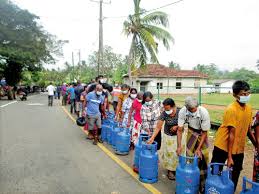
The gas scarcity that began has become a widespread crisis, severely impacting various segments of the population. The shortage has not only disrupted daily routines but also created significant hardships for market women, students, parents, and many others in the community.Prior to the scarcity, a kilogram of gas was sold at an affordable rate of 1,000 naira. However, with the current shortage, prices have skyrocketed to as high as 2,000 naira. This sharp increase has made it difficult for many families to afford cooking gas, leading to increased financial strain and food insecurity. For some households, children are going without proper meals, and parents are struggling to find alternative ways to prepare food, which affects the health and well-being of the entire family.
The impact on students is particularly dire. Many students rely on home-cooked meals to sustain them through their school day. Due to the lack of gas, some students are unable to eat before attending classes, affecting their concentration and academic performance. Others skip school altogether because they cannot prepare food at home, further hampering their education and future prospects.Food vendors and market women are also bearing the brunt of the crisis. Many food sellers depend on gas to cook their dishes, and with the shortage, they have been forced to halt their operations. Some have even shut down their businesses permanently, losing their source of livelihood. The stress and frustration of standing in long queues at gas stations only to be told that the gas has run out have added to their woes. The scarcity has led to chaotic scenes at gas stations, with people fighting over limited supplies, further highlighting the desperation and tension within the community.
In search of alternative cooking methods, some individuals have turned to charcoal, which is now being sold at inflated prices of 200 to 500 naira. Unfortunately, charcoal is not a suitable substitute for everyone, especially those with health issues or those living in areas where it is not practical to use.The scarcity has also resulted in the closure of many gas stations, leaving many people without access to fuel. The situation has caused widespread distress, with many community members pleading with the government to intervene and find a lasting solution. They emphasize the urgent need for intervention to restore the supply of gas, alleviate suffering, and stabilize the market.
The gas shortage has created a ripple effect across all facets of daily life. It has disrupted families, hindered education, crippled small businesses, and heightened social tensions. The community is hopeful that swift governmental action will resolve the crisis and restore normalcy to their lives.
The gas scarcity that began has become a widespread crisis, severely impacting various segments of the population. The shortage has not only disrupted daily routines but also created significant hardships for market women, students, parents, and many others in the community.Prior to the scarcity, a kilogram of gas was sold at an affordable rate of 1,000 naira. However, with the current shortage, prices have skyrocketed to as high as 2,000 naira. This sharp increase has made it difficult for many families to afford cooking gas, leading to increased financial strain and food insecurity. For some households, children are going without proper meals, and parents are struggling to find alternative ways to prepare food, which affects the health and well-being of the entire family.
The impact on students is particularly dire. Many students rely on home-cooked meals to sustain them through their school day. Due to the lack of gas, some students are unable to eat before attending classes, affecting their concentration and academic performance. Others skip school altogether because they cannot prepare food at home, further hampering their education and future prospects.Food vendors and market women are also bearing the brunt of the crisis. Many food sellers depend on gas to cook their dishes, and with the shortage, they have been forced to halt their operations. Some have even shut down their businesses permanently, losing their source of livelihood. The stress and frustration of standing in long queues at gas stations only to be told that the gas has run out have added to their woes. The scarcity has led to chaotic scenes at gas stations, with people fighting over limited supplies, further highlighting the desperation and tension within the community.
In search of alternative cooking methods, some individuals have turned to charcoal, which is now being sold at inflated prices of 200 to 500 naira. Unfortunately, charcoal is not a suitable substitute for everyone, especially those with health issues or those living in areas where it is not practical to use.The scarcity has also resulted in the closure of many gas stations, leaving many people without access to fuel. The situation has caused widespread distress, with many community members pleading with the government to intervene and find a lasting solution. They emphasize the urgent need for intervention to restore the supply of gas, alleviate suffering, and stabilize the market.
The gas shortage has created a ripple effect across all facets of daily life. It has disrupted families, hindered education, crippled small businesses, and heightened social tensions. The community is hopeful that swift governmental action will resolve the crisis and restore normalcy to their lives.