Governance Too Weighty for Government to Handle Alone — Dapo Abiodun
Governance Too Weighty for Government to Handle Alone — Dapo Abiodun
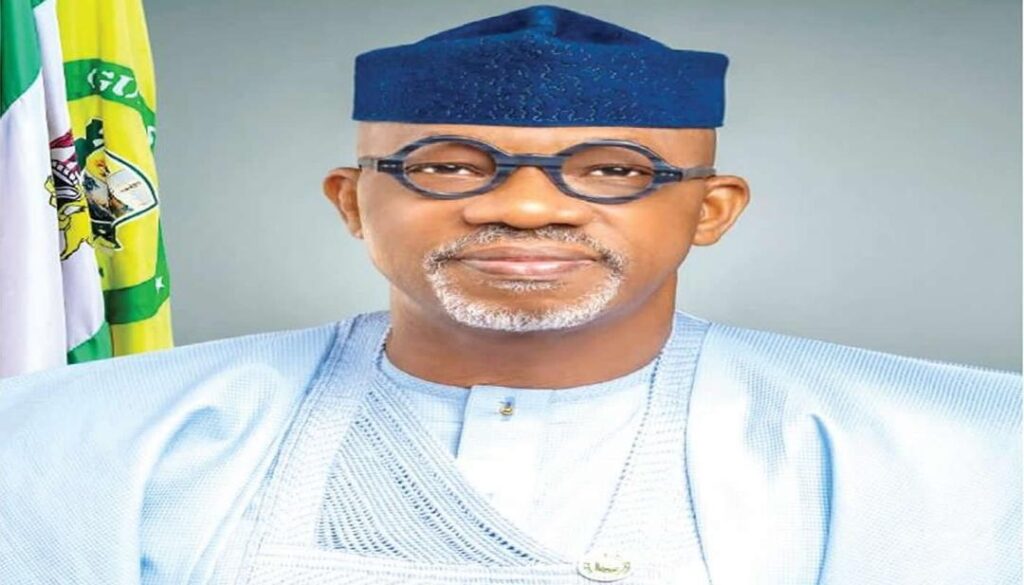
Ogun State Governor, Dapo Abiodun, has emphasized that tackling poverty and driving national development cannot be the sole responsibility of government. He stressed the importance of shared responsibility involving faith-based organisations, the private sector, and individuals.
Speaking in Lagos on Tuesday as chairman at the 12th Annual Public Lecture of The Foursquare Gospel Church Nigeria, themed “Poverty Alleviation, Economic Development and Stability of the Nigerian Economy,” held at The Marquee, Harbour Point, Victoria Island, Abiodun noted that the complexity of governance makes it impossible for government to bear the development burden alone.
“The task of governance cannot rest solely on government, and the church has shown a clear commitment to this understanding through its various initiatives,” he stated.
He commended Foursquare Gospel Church for going “beyond the pulpit” to provide social interventions through schools, hospitals, humanitarian outreaches and empowerment programmes that had impacted countless lives.
Abiodun added, “The problem of poverty requires economic stability which must be anchored on inclusive growth where opportunities are extended to all citizens, especially the vulnerable.
“Economic development and stability are two sides of the coin. Without stability, the economy is short-lived. Without development, poverty persists. As leaders, whether in the government, church or private sector, we must collaborate to break the cycle because poverty is not just an economic statistic, it is a human reality. We must care for the vulnerable.”
Earlier in his welcome address, the General Overseer of Foursquare Gospel Church Nigeria, Rev. Sam Aboyeji, said no nation could achieve development and stability without deliberately tackling poverty.
“Poverty remains one of the most pressing challenges facing Nigerians today, and overcoming it requires a united effort from government, faith-based organisations, dedicated institutions, and individuals,” he said.
Aboyeji explained that with seven decades of uninterrupted presence in Nigeria, the church views it as a “sacred duty” to contribute to national development, which informed its commitment to hosting the annual lecture as a forum for intellectual engagement and policy dialogue.
In his lecture, Senior Fellow and Associate Professor at Lagos Business School, Dr. Doyin Salami, decried the fragility of the Nigerian economy, cautioning that the current 3.2 per cent growth rate was insufficient to curb poverty.
He stressed that Nigeria requires a sustained annual growth of at least 6.5 per cent over the next decade to achieve tangible progress.
“Available data indicates that current investment levels in Nigeria are too weak to drive significant growth. We must not repeat past errors but rather ensure our investments stimulate, support, and propel development,” Salami warned.
He recalled that while Nigeria once outperformed China in poverty indices as far back as 1992, China had turned its fortunes around by 1996, leaving Nigeria behind.
Salami further cautioned that Nigeria’s dependence on the services sector, at the expense of industry, was worsening de-industrialisation and threatening the country’s chances of achieving sustainable growth.