House of Representatives investigates 567 petitions on job losses and rights violations across the country.
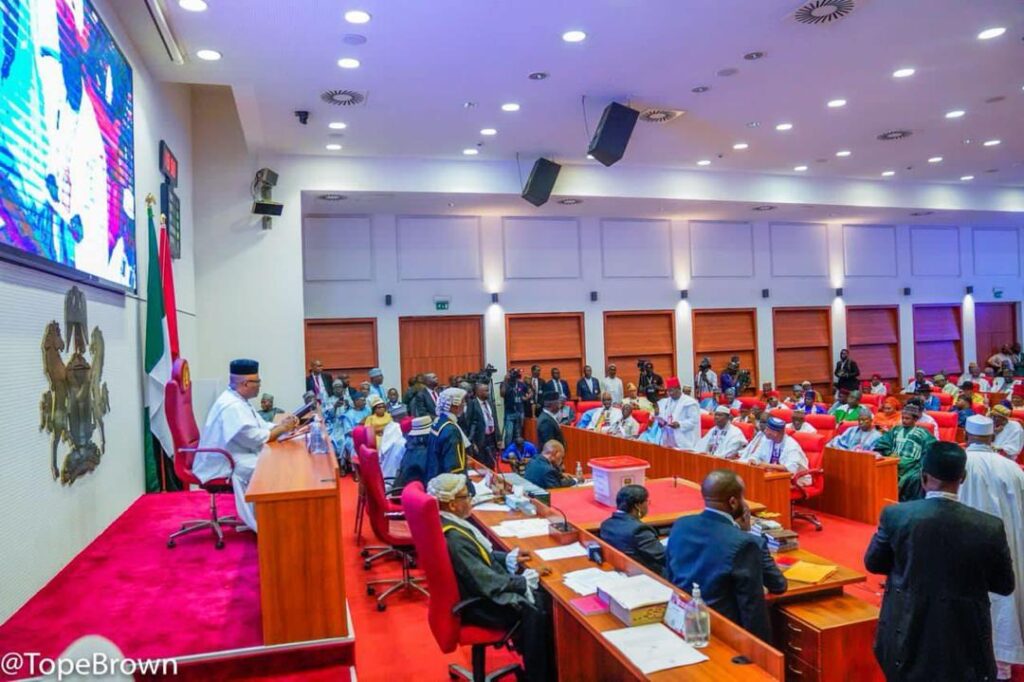
House of Representatives investigates 567 petitions on job losses and rights violations across the country.
The House of Representatives is currently reviewing 567 petitions concerning wrongful job terminations, rights violations, and other complaints from Nigerians across the country.
Speaker Tajudeen Abbas made this disclosure on Tuesday in Abuja during his mid-term address at the House of Representatives Open Week, an event designed to enhance public engagement with citizens.
He stated, “This House truly serves as the people’s tribunal. Through the Committee on Public Petitions, we received 621 petitions from citizens regarding wrongful terminations, rights violations, and other grievances.
“So far, 24 petitions have been fully addressed with reports completed, while 30 were dismissed due to lack of merit.”
The remaining 567 are at various stages of the hearing and investigation process. Some have reached the floor for debate and recommendations, showing that no plea is too small for this institution.”
He also gave a breakdown of the bills and motions introduced and processed under his leadership in the past two years.
“In our first two sessions, this House introduced 2,263 bills. Among these, 1,478 have gone through a second reading, 135 are awaiting further consideration, and 339 have been referred to Standing Committees.
“Five bills were negatived, reflecting rigorous legislative debate. Member-sponsored bills accounted for 2,204 of the total, with 26 executive bills and 33 emanating from the Senate for concurrence.
“These figures indicate a steady upward trend since 1999, highlighting an ever-growing legislative capacity and competence,” he said.
Abbas added, “As of 30 June 2025, the House has passed 237 bills and forwarded them for presidential assent, of which 55 have been signed into law.
“These enactments include the Tax Reform Laws, comprising the Nigeria Tax Act, the Nigeria Tax Administration Act, the Nigeria Revenue Service Act, and the Joint Revenue Board Act, which simplify the tax code and harmonise revenue collection across tiers of government.
“The Electricity Act (Amendment) 2023 transfers electricity to the concurrent legislative list, empowering both federal and state governments to legislate on power generation, transmission, and distribution.
“The Student Loans (Access to Higher Education) Act 2024 establishes the Nigerian Education Loan Fund as an independent body to expand access to tertiary education.”
On the security front, Abbas, who represents Zaria Federal Constituency, Kaduna State, said, “The Control of Small Arms and Light Weapons Act creates a centre to curb illicit firearms.
At the same time, the Defence Industries Corporation of Nigeria Act 2023 modernises our defence production framework. Cybersecurity received a boost through the Cybercrimes (Prohibition and Protection) (Amendment) Act 2024.”
He also lauded the House for its pro-development posture, given its passage of the development commission bills, which gave rise to the establishment of commissions for the six geopolitical zones.
“Six regional Development Commissions were established to drive region-specific growth.
“To protect livelihoods, the National Minimum Wage (Amendment) Act 2024 raised the statutory wage, and the Nigeria Police (Amendment) Act 2024 strengthened police professionalism.
“The Finance Act (Amendment) 2024 aligned fiscal policy with economic priorities, and the Judiciary Office Holders (Salaries and Allowances, etc) Act 2024 revised judicial remuneration to safeguard independence.
“The Central Bank of Nigeria Act (Establishment) (Amendment) Act modernises the apex bank’s mandate.
“Other statutes include the Nigeria Anti-Doping Act 2025, the Investments and Securities Act 2025, the Revenue Mobilisation Allocation and Fiscal Commission Act 2025 and several Acts that establish new universities and specialised institutions to broaden educational opportunities,” he added.
On the ongoing efforts to amend the 1999 Constitution, Abbas said, “We are considering 109 amendment bills across various sectors, including electoral, judicial, legislative, and inclusive governance.
“Twelve electoral reform bills address the scheduling of all general elections on a single day, establish independent candidacy, and create a dedicated commission for local government elections.
“Judicial reforms encompass 21 bills designed to streamline appellate processes and strengthen judicial independence.”
He continued, “A central feature of our inclusive governance proposals is the introduction of constitutionally guaranteed reserved seats for women and persons with disabilities. Under the draft amendment, 10 per cent of seats in both the Senate and the House of Representatives would be set aside for women, apportioned by state to ensure regional balance.
“These seats would be filled through direct elections on separate ballots, with staggered terms to promote continuity and mentorship.
“Five per cent of seats would be reserved for persons with disabilities, with candidates nominated by accredited disability advocacy organisations.
“Reserved-seat representatives would enjoy the same rights, privileges, and committee assignments as their peers, reinforcing their full integration into legislative work.”
Speaking at the event, former Speakers, Femi Gbajabiamila and Patricia Etteh, called on the lawmakers to maintain their closeness with the people at the grassroots, reminding them that it was their generosity that they sit in the hallowed parliamentary chambers.
Addressing his former colleagues, Gbajabiamila, who doubles as the Chief of Staff to President Bola Tinubu, said, “Everything that we do in the legislature is about maintaining that connection to the people on whose behalf we serve.
“When legislators debate a bill or motion in the chamber, we do so not as individuals expressing an opinion, but as representatives ensuring that the voices of our constituents are heard in the national arena and that their concerns and interests are factored into the legislative policy outcomes.
“When we hold public hearings, inviting stakeholders and members of the public into the legislative process, we do so because democratic governance is an open rather than opaque process built on the premise that when we join our heads together and draw on the various experiences and contexts of all the different interests and tendencies that make up our country, we arrive at outcomes that are better than they would have been otherwise.”
On her part, Etteh urged the lawmakers to seize the opportunity of the open week to return to their constituencies and engage with the people.
“This is the only way you can return to the House. Your constituents do not live in Abuja.
“You cannot operate without being a good representative of the people. If you don’t let your constituents know what you are doing, you will find it difficult to return here (Green Chamber),” she said.
Former Speaker Yakubu Dogara reminded the legislators of the importance of accountability as representatives of the people.
“Nigerians expect us to be accountable. Only through accountability can we hold others responsible,” he said.
He praised the National Assembly and President Tinubu for their efforts on the Student Loan Bill, noting, “Those who had lost hope of continuing their education are now back in school. This is highly commendable.”
Similarly, Senator Shehu Sani urged lawmakers to focus on service delivery, cautioning, “It’s not about how many years you spend here, but the impact you make. What difference have you made for the wider society?”
Other notable attendees at the event included the Emir of Zazzau, Amb Nuhu Bamali, and a representative of the Minister of Women Affairs, among others.