Human Rights Advocates Criticize Senate’s Push for Death Penalty in Security Bill.
Human Rights Advocates Criticize Senate’s Push for Death Penalty in Security Bill.

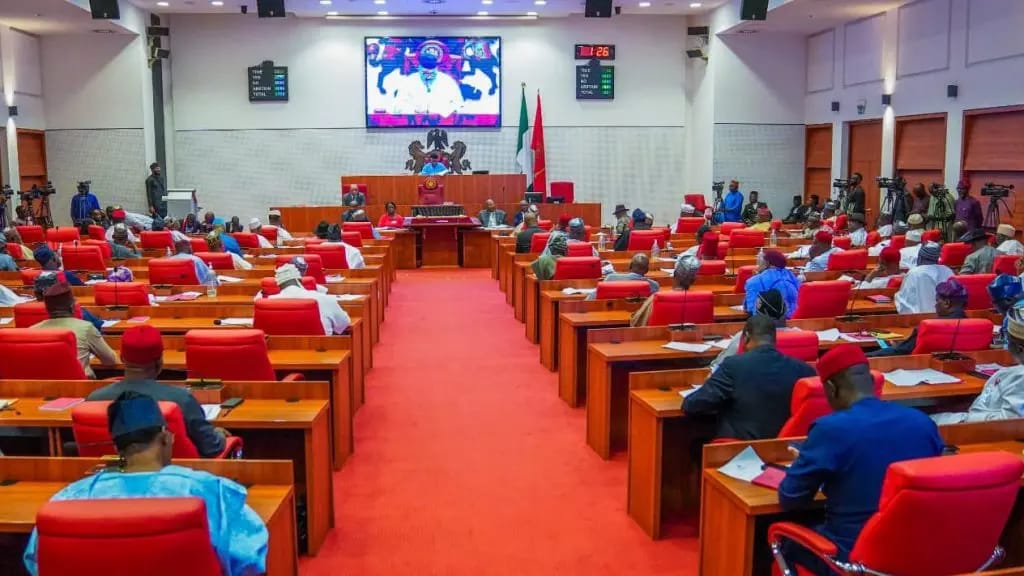
The Nigerian Senate’s recent endorsement of the death penalty for kidnappers and bandits has sparked heated debate across the country. The Senate passed a bill, the Terrorism (Prevention and Prohibition) Amendment Bill, 2025, which classifies kidnapping and hostage-taking as acts of terrorism, and mandates the death penalty for offenders. Sponsored by Senate Leader Opeyemi Bamidele and supported by 108 senators, the bill aims to empower security agencies to dismantle kidnapping networks through asset forfeiture and intelligence-led operations. Senators across party lines hailed the move as urgent and necessary to curb Nigeria’s rising insecurity, which has caused significant human and economic losses.
However, critics argue that the law may not address the root causes of insecurity. Renowned human rights scholar Prof. Uchenna Emelonye warned that imposing the death penalty contradicts Nigeria’s international commitments under the International Covenant on Civil and Political Rights (ICCPR). He emphasized that evidence shows capital punishment does not deter crime and increases the risk of wrongful executions, especially given Nigeria’s flawed justice system. Countries like Sierra Leone and Rwanda, which have abolished the death penalty, continue to combat kidnapping effectively, he pointed out.
Sheikh Ahmad Gumi, an influential Islamic scholar, also opposed the law, advocating for dialogue and social investment instead of harsh punitive measures. He argued that inequality, poverty, and marginalization are the real drivers of violence and that rehabilitation could be more effective than executions. Social media commentators and legal experts have voiced concerns about the fairness and efficacy of severe penalties, questioning whether they will truly reduce crime.
Within the Senate, opposition arose over procedural issues, with some senators like Adams Oshiomhole objecting to rushing the bill through voice votes. Despite dissent, many lawmakers and state leaders remain convinced that the death penalty is a necessary deterrent amidst Nigeria’s ongoing security crisis. The debate highlights the complex balance between security measures, human rights, and justice in Nigeria’s fight against insecurity.