Jonathan calls for transparent INEC chair appointment, criticises defections
Jonathan calls for transparent INEC chair appointment, criticises defections
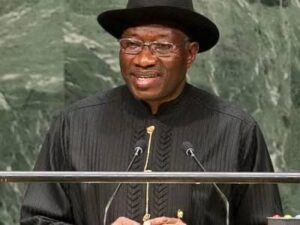
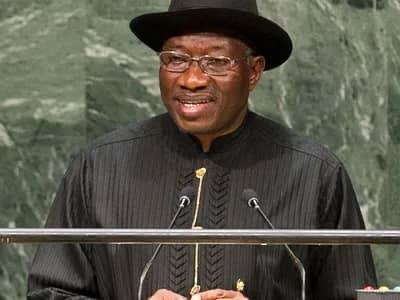
Former President Goodluck Jonathan on Wednesday stressed the need for urgent reforms in Nigeria’s electoral system, with particular emphasis on the appointment process of the Independent National Electoral Commission (INEC) Chairman and the growing wave of political defections.
Speaking at the National Action Plan for Electoral Reform Dialogue, organised by the Abuja School of Social and Political Thought, Jonathan—represented by the Executive Director of the Goodluck Jonathan Foundation, Ann Iyonu—acknowledged the progress made since Nigeria’s return to democracy in 1999 but pointed out lingering weaknesses in the system.
He noted: “Nigeria has indeed recorded notable achievements since the advent of democratic governance, yet our electoral framework continues to grapple with significant shortcomings. If we are genuinely committed to deepening democracy, we must summon the courage to reform the system so it truly reflects the will of the people and upholds the principles of justice, accountability, and inclusiveness.”
Jonathan recommended a review of how the INEC Chairman is appointed, proposing that the process be handled by an independent panel comprising representatives of the judiciary, civil society, academia, labour unions, and professional associations, to ensure transparency and credibility.
“Credibility of elections rests heavily on the neutrality and competence of the independent National Electoral Commission. So many questions have continued to be raised on the propriety of the process of appointing the INEC Chairman. I believe that Nigeria can also improve the process by establishing an independent screening and nomination mechanism.
This reform will reduce perceptions of bias, it will promote public trust in INEC, and enhance the legitimacy of its decisions,” Jonathan added.
On the issue of political defections, Jonathan criticised the increasing practice of “cross-cupping,” where elected officials abandon the parties under which they were elected, often without ideological justification or accountability.
“Parties are the foundation of any democracy, but in our context they have become vulnerable to opportunism and instability. We have seen a disturbing rise in the practice of cross-cupping — elected officials defecting from the parties under which they were elected… To remedy this, we should strongly consider the establishment of an independent Office of the Registrar of Political Parties charged with regulating party operations, promoting internal democracy, and enforcing party discipline,” he said.
He explained that such registrar would have the “authority to declare the seat of any defector vacant.” He noted that similar systems have worked in Kenya and Malawi, affirming “the principle that the electoral mandate belongs to the people and not to individual ambition.”
Jonathan also stressed the need to resolve all post-election disputes before the swearing-in of elected officials, warning that unresolved cases disrupt governance and erode public confidence.
“It creates confusion and undermines governance when candidates with unresolved election cases assume office only to be later removed by the courts. This undermines the authority of the office and the credibility of the electoral process… Justice delayed in elections is justice denied, not just for the candidates, but for the electorate,” he said,
Furthermore, he suggested that the judicial process be streamlined by “reducing the number of courts handling electoral cases,” particularly for governorship and presidential elections.
In his closing remarks, Jonathan underscored that electoral reforms are not partisan but essential to building a stronger democracy.
“Democracy is not just about casting ballots. It is about building institutions, promoting accountability, and protecting the citizens. The reforms we are discussing today are not partisan. They are patriotic. They are not meant to benefit any one group, but to strengthen Nigeria.”
The National Publicity Secretary of the Peoples Democratic Party (PDP), Debo Ologunagba, has reaffirmed that the party has many capable contenders for the 2027 presidential election, stressing that former President Goodluck Jonathan remains a member of the PDP.
Speaking on the Arise TV Morning Show on Wednesday, Ologunagba clarified:
“President Jonathan is still a member of this party because he has not resigned. On the other hand, Mr. Obi contested the last presidential election under another political party and has not declared any intention to join the PDP. Therefore, it would be inappropriate for me to speculate on that. What I can say is that we already have highly qualified individuals within our party.”
He further commended Oyo State Governor, Seyi Makinde, describing him as one of the PDP’s “poster boys,” particularly for his achievements and capacity to inspire confidence among Nigerians.
“In the PDP today, we have outstanding Nigerians and governors who are delivering results, and the people can see that,” he added.