Marketers raise concerns as Dangote takes steps to slash cooking gas prices
Marketers raise concerns as Dangote takes steps to slash cooking gas prices
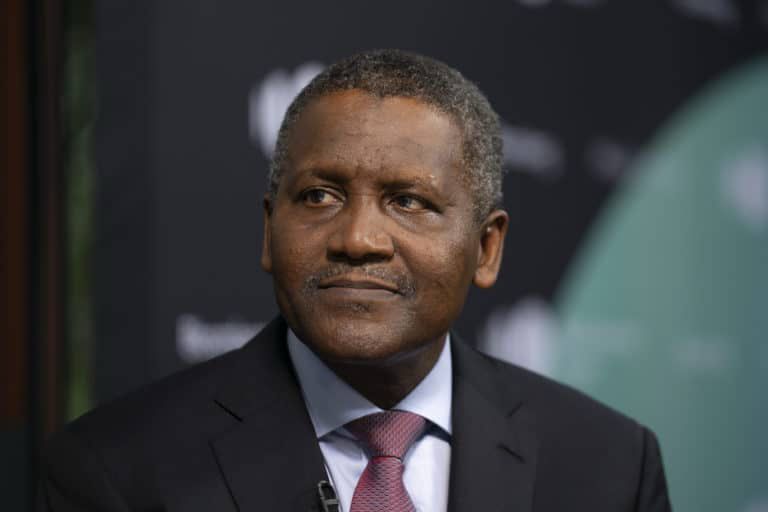
Alhaji Aliko Dangote, President of the Dangote Group, has unveiled plans to reduce the cost of Liquefied Petroleum Gas (LPG), commonly known as cooking gas. He also stated that if existing distributors hinder the price reduction, his company would begin direct sales to consumers.
However, industry operators have pushed back against the move, accusing Dangote of attempting to monopolize the LPG sector. On Monday, dealers voiced their opposition, expressing concern over the potential for market domination.
During a recent tour of his refinery with both local and international guests, Dangote emphasized that the current cost of cooking gas is too high for the average Nigerian, many of whom are forced to rely on firewood.
He revealed that the refinery is currently producing 22,000 tonnes of LPG daily and is scaling up production to meet domestic demand, especially as more Nigerians transition to gas for cooking.
President of the Dangote Group, Alhaji Aliko Dangote, has announced plans to reduce the price of Liquefied Petroleum Gas, also known as cooking gas. He also promised to start direct sales of the product to consumers should the existing distributors fail to allow the price crash in cooking gas.
However, operators in the sector have disagreed with the plan, saying the businessman was planning to monopolise the LPG sector. They kicked against the move on Monday, as the dealers expressed fear of a possible monopoly.
Speaking during a recent tour of his refinery by some local and foreign guests, Dangote stressed that the current price of cooking gas is expensive and not affordable for the common people who depend on firewood for cooking.
He disclosed that the refinery now produces 22,000 tonnes of LPG daily and it is ramping up production for distribution into the Nigerian market, especially as Nigerians move towards the use of gas for cooking.
Speaking to members of the Lagos Business School CGEO Africa, at the refinery in Lekki, Dangote said, “The one that we didn’t write, which you must have seen, is LPG. Currently, we do LPG of about 2,000 tonnes per day. You know Nigeria is gradually moving to the usage of LPG.
But I believe it is expensive, but right now we’re trying to bring down the price and make it cheaper.”
Dangote warned that “if the distributors are not trying to bring it down, we’ll go directly and sell to the consumers, so that people will now transit from firewood or kerosene to LPG for cooking.”
It was recalled that Dangote plans to start the direct distribution of petrol, diesel, and aviation fuel to marketers nationwide in August, with 4,000 CNG-powered buses procured for the exercise.
Currently, the price of cooking hovers around N1,000 and N1,300 per kilogramme. Dangote said this would be brought down to ensure affordability.
It appears operators in the LPG market are not pleased with Dangote’s plan to disrupt the sector.
Speaking in an interview with our correspondent, the former Chairman of the LPG and Natural Gas Downstream Group of the Lagos Chamber of Commerce and Industry, Godwin Okoduwa, described the plan as monopolistic.
Okoduwa expressed concern that the billionaire businessman should recognise the fact that some investors grew the market from 70,000 metric tonnes in 2007 to over 1 million metric tonnes in 2022, saying collaboration is the way to go.
“I think it’s monopolistic. I think a market should be protected to encourage growth. The LPG industry in Nigeria grew from 70,000 metric tonnes in 2007 to over 1.3 million tonnes in 2022.
That was done by collaboration — collaboration with the Federal Government, the NLNG, and offtakers. Everything was done in collaboration. It grew from 70,000 to 250 to 800, and now over a million,” Okoduwa said.
He stressed that growth cannot be achieved through a monopoly but through collaboration.
“Today, we are just under 5kg or 6kg per capita consumption in terms of LPG. Other countries are doing much more. South Africa is doing double digits, Morocco and Tunisia are doing double digits. We can do much more.
An industry expert has called for a more collaborative approach in the Liquefied Petroleum Gas (LPG) sector, urging Alhaji Aliko Dangote to avoid disrupting existing market players despite his significant investments.
Speaking on the matter, the expert emphasized the need to focus on expanding the LPG industry rather than creating tension within it. “Yes, he has invested, and it’s a capitalist economy, but that shouldn’t come at the expense of those who have long contributed to the growth of this industry,” he said. “There are people who have invested time, resources, and effort into building this sector. Dangote wouldn’t have invested if there wasn’t already an established market. He should respect that and support its growth. It shouldn’t be a zero-sum game—it should be collaborative.”
While acknowledging Dangote’s dominant position, the expert advised him to seek partnerships instead of competition. “The LPG market in Nigeria currently stands at about 1.3 million tonnes, but it has the potential to grow to 5 million tonnes. Collaboration will benefit everyone in the long run,” he added.
In response to Dangote’s claim that his goal is to make cooking gas affordable and reduce reliance on firewood, another industry stakeholder, Okoduwa, countered, “If affordability is his true goal, he should start by developing LPG infrastructure in the Northeast, where consumption is currently the lowest. That would be a genuine step forward.”
Also weighing in, the Executive Secretary/CEO of the Nigerian Association of Liquefied Petroleum Gas Marketers, Bassey Essien, expressed skepticism about Dangote’s ability to sell gas directly to consumers or significantly reduce prices. “I think it’s unrealistic,” Essien stated. “Look at petrol—has his refinery been able to sell directly to us at a cheaper rate? The same challenges apply here.”