National Assembly Speaker calls for reforms to tackle debt burden
National Assembly Speaker calls for reforms to tackle debt burden
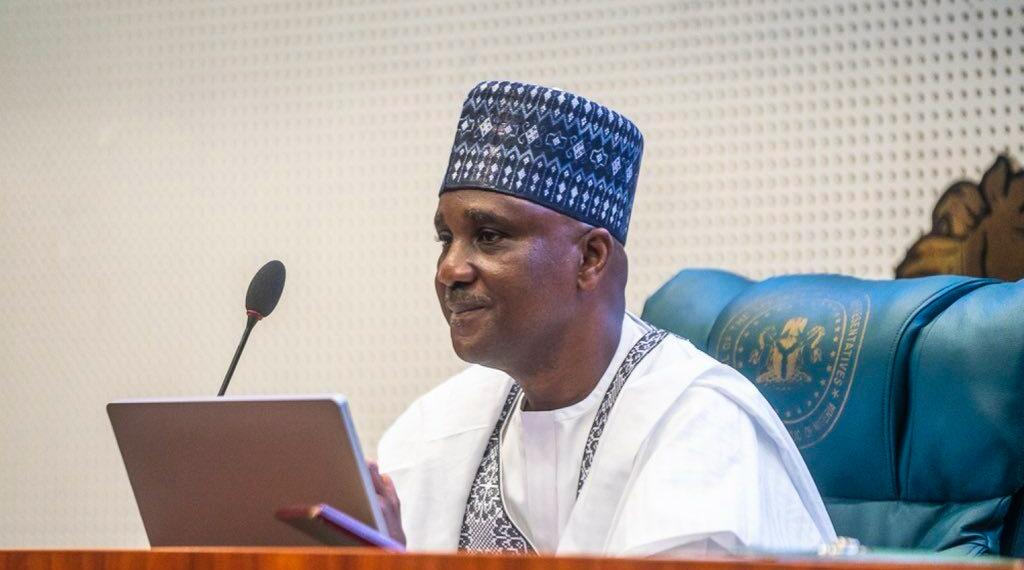
The Speaker of the House of Representatives, Tajudeen Abbas, on Monday urged “parliamentary attention and coordinated reforms” to address Nigeria’s mounting debt, describing it as “not just a budgetary issue, but a structural crisis.”
However, the Presidency and the Ministry of Finance maintained that the country’s debt profile remains within sustainable limits, stressing that ongoing reforms are targeted at resolving current economic challenges.
Abbas made the remarks at the opening of the 11th Annual Conference and General Assembly of the West African Association of Public Accounts Committees, held at the National Assembly in Abuja.
The gathering, which brought together lawmakers, development partners, and financial experts from across West Africa, was themed: “Strengthening Parliamentary Oversight of Public Debt: The Role of Finance and Public Accounts Committees.”
In his speech, Abbas, who was represented at the event by the Leader of the House, Prof Julius Ihonvbere, noted that Nigeria’s debt had reached “a critical point” and called for urgent reforms to tame it.
“As of the first quarter of 2025, Nigeria’s total public debt stood at N149.39tn, equivalent to about US$97bn. This represents a sharp rise from N121.7tn in the previous year, underscoring how quickly the burden has grown.
“Even more concerning is the debt-to-GDP ratio, which now stands at roughly 52 per cent, well above the statutory ceiling of 40 per cent set by our own laws.
“This is not just a budgetary concern, but a structural crisis that demands urgent parliamentary attention and coordinated reform,” he said,” the Speaker warned.
The Speaker described the breach of the debt limit as “a signal of strain on fiscal sustainability,” stressing the need for “stronger oversight, transparent borrowing practices, and a collective resolve to ensure that tangible economic and social returns match every naira borrowed.”
He drew parallels with the wider African debt landscape, where several countries are trapped in spiraling debt service obligations.
“This is not just a budgetary concern, but a structural crisis that demands urgent parliamentary attention and coordinated reform,” Abbas declared.
However, the Presidency, appeared dismissive of Abbas’ alarm, with a senior official, who did not want to be named saying, “He (Abbas) is not the authority on fiscal matters. What he said is an opinion.”
To mitigate fiscal risks, Speaker Abbas had announced that Nigeria is ready to champion the establishment of a West African Parliamentary Debt Oversight Framework under WAAPAC.
The framework, he explained on Monday, would harmonise debt reporting across the sub-region, set transparency standards, and empower parliaments with timely data to scrutinise borrowing practices.
In addition, he unveiled plans for a regional capacity-building programme for Public Accounts and Finance Committees, designed to equip members with modern tools for debt sustainability analysis and fiscal risk assessment.
He acknowledged borrowing as an important tool for development, but warned against reckless debt accumulation.
“Borrowing should support infrastructure, health, education, and industries that create jobs and reduce poverty. Reckless debt that fuels consumption or corruption must be exposed and rejected.
“Oversight is not just about figures, but about the lives and futures behind those figures,” he stressed.
The Speaker further reiterated the 10th House’s commitment to transparency and accountability in public finance.
He said under its Open Parliament Policy, all major borrowing proposals would be subjected to public hearings, while simplified debt reports would be made available to citizens.
Abbas urged participants to approach deliberations with dedication, noting that the resolutions would play a vital role in strengthening fiscal responsibility and accountability across the continent.
Meanwhile, the Federal Government says President Tinubu’s bold economic reforms are beginning to yield results, with debt levels becoming more sustainable and investor confidence returning.
The Minister of Finance and Coordinating Minister of the Economy, Wale Edun, who also spoke at the Annual Conference argued that, like many countries in West Africa, Nigeria faces significant fiscal challenges, including elevated debt service costs, constrained revenues, and rising demands for public spending.
Edun maintained that reforms implemented under President Tinubu are reversing negative trends and setting the country on a sustainable growth path.
“Nigeria is turning the corner. The reforms are delivering measurable impact in terms of investor confidence, reduced spending on fuel imports, greater energy self-sufficiency, and value addition in our economy,” Edun said.
He disclosed that Nigeria’s debt service-to-revenue ratio had dropped to about 60 per cent in 2024, while the debt-to-GDP ratio stands at 38.8 per cent, which he described as a comfortable level compared to global benchmarks.
He added that revenues grew by 34.7 per cent in the first half of 2025 compared with last year, expanding fiscal space for investment in priority sectors.
Edun credited the gains to tough but necessary policy choices such as the removal of fuel subsidies, liberalisation of the exchange rate, and the roll-out of a comprehensive tax reform programme aimed at boosting efficiency, simplifying compliance, and raising Nigeria’s tax-to-GDP ratio over time.
According to him, these reforms are essential for creating a predictable macroeconomic environment that encourages private investment, which accounts for about 90 percent of economic activity.
“Government’s role is to act as a catalyst, not to crowd out the private sector. With the right fiscal discipline, we can unlock opportunities and ensure inclusive growth that lifts millions out of poverty,” the Minister stated.
On Nigeria’s fiscal outlook, Edun highlighted key priorities such as debt transparency, growth-oriented borrowing, improved domestic revenue mobilisation, and prudent budgeting in line with the Fiscal Responsibility Act.
He stressed that the Federal Government remains committed to project-linked borrowing that delivers measurable returns, while avoiding money-printing or unsustainable financing options.
Edun further pointed to global pressures—declining development aid, reduced global trade, and rising international interest rates—that have complicated fiscal management for developing nations.
According to him, these challenges make it imperative for African countries to become more self-reliant by adopting reforms, leveraging technology, and embracing digitisation to boost revenue generation.
The minister also underscored that strong parliamentary oversight is essential for upholding fiscal discipline.