Nigeria Holds 40% of West Africa’s 500 Million Illegal Arms – CDS
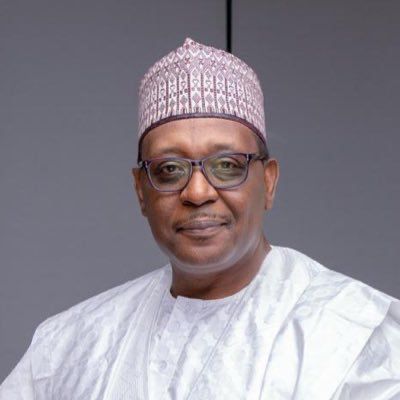
Nigeria Holds 40% of West Africa’s 500 Million Illegal Arms – CDS

The Chief of Defence Staff, General Christopher Musa, has raised concerns about Nigeria’s increasing exposure to global security threats, revealing that the country accounts for 40 per cent of the more than 500 million illegal small arms and light weapons circulating across West Africa.
Speaking in Ibadan, Oyo State, on Thursday during a lecture titled “Global Fragility and Security Management in Nigeria,” Gen Musa warned that most of these weapons, which are smuggled from conflict-prone regions in the Sahel and North Africa, have significantly contributed to terrorism, banditry, and ethnic violence—particularly in northern Nigeria.
The CDS made these remarks at the second edition of the Distinguished Personality Lecture, hosted by the TETFund Centre of Excellence in Security Management at the University of Ibadan’s Trenchard Hall. He noted that Nigeria’s internal security challenges are increasingly linked to broader global fragility trends.
“Over 500 million illegal small arms and light weapons are circulating within West Africa, and about 40 per cent of them find their way into Nigeria,” he stated.
“These weapons, often smuggled from conflict zones in the Sahel and North Africa, have empowered terrorists, bandits, and ethnic militias, escalating violence in Nigeria’s northern regions,” he bemoaned.
He, therefore, said Nigeria must, as a matter of urgency, improve its security strategies in the face of increasing global fragility.
The CDS said, “Fragile states are no longer isolated issues. They pose a direct threat to regional and global peace, and Nigeria is not immune.”
He highlighted the various ways Nigeria’s security was being undermined by external crises and instability, including the proliferation of arms, economic shocks, transnational terrorism, cyber threats, and environmental stressors.
Musa attributed the development to porous borders and weak governance in remote regions.
“Nigeria’s vulnerabilities are not just internal; they’re being shaped by the global fragility matrix.
“We must respond with resilience, innovation, and collective will. No nation is an island in today’s security landscape,” he said.
The CDS also raised concern over the rising influence of disinformation and online radicalisation.
Musa noted that Nigeria faced hybrid threats beyond the battlefield with digital platforms like Facebook and WhatsApp now being weaponised to spread ethnic hatred and undermine public trust.
He, therefore, advocated a series of policy actions to confront these complex challenges.
Among the suggested policy actions are “A multi-agency approach to security management, as outlined in Nigeria’s National Defence Policy; enhanced border security, with the use of fencing, surveillance technology, and better-trained personnel.
“Greater collaboration with neighbouring countries and international partners to curb the movement of arms and terrorists.
“Investment in youth empowerment, education, agriculture, and entrepreneurship to address root causes of insecurity. Strengthening civil institutions and promoting dialogue to foster national unity and social cohesion.”
The defence chief said security was no longer about guns and boots alone, adding that, “It’s about sustainable development, responsive governance, and empowered communities.”
The Chairman of the event and former Chief of Army Staff, Lt Gen Tukur Buratai (retd.), represented by Lt Gen Lamidi Adeosun (retd), echoed similar sentiments.
“Security management in Nigeria must evolve.
This requires governance reforms, capacity building, and community-based intelligence systems to strengthen early warning mechanisms and deter threats before they escalate,” he said.
The Vice-Chancellor of the University of Ibadan, Prof Kayode Adebowale, described the lecture as a powerful blend of scholarship and field experience.
“Today’s dialogue connects academic knowledge with real-world security leadership. It’s through such collaboration that we can craft evidence-based solutions to Nigeria’s most urgent challenges,” he said.
Earlier, the Director of the TETFund Centre of Excellence in Security Management (TECESM), Benjamin Aluko, described the CDS’s visit as a significant milestone for the centre.
“Your perspectives will not only enhance our academic offerings but also offer practical strategies we can further investigate through research,” Aluko stated.