Senate Proposes Bill to Criminalise Vandalism of Power Infrastructure
Senate Proposes Bill to Criminalise Vandalism of Power Infrastructure
Once amended, passed, and signed into law, the bill is expected to provide clarity on transitional provisions related to the transfer of intra-state electricity responsibilities from the Nigerian Electricity Regulatory Commission (NERC) to state governments. This includes issues concerning the operation of the national grid and other overlapping regulatory matters.
Sponsored by Senator Enyinnaya Abaribe (APGA, Abia South), Chairman of the Senate Committee on Power, the bill passed its second reading on Tuesday. Senate President Godswill Akpabio subsequently referred it to the Committee on Power for further review, with a directive to report back in six weeks.
The proposed legislation also aims to establish a comprehensive sector-wide framework for engaging host communities by licensees within the Nigerian Electricity Supply Industry (NESI) across the power value chain. Additionally, it seeks to eliminate ambiguities in the current Act, enhance clarity for effective implementation, and strengthen the existing institutional and legal structures governing the NESI.
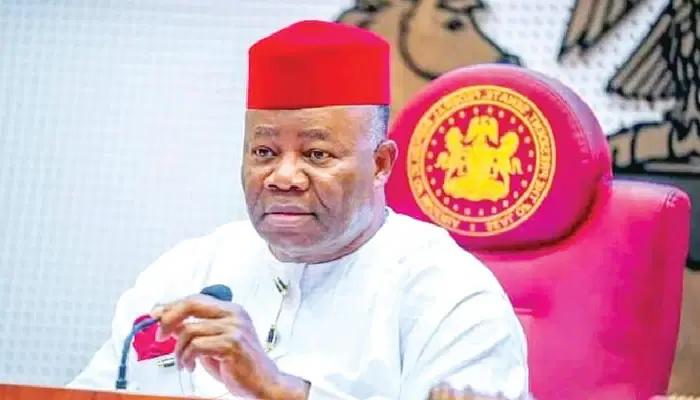
During the debate on the bill’s general principles, Senate President Akpabio emphasized the critical role of electricity in national development, stating that without reliable power supply, industrial growth in Nigeria would be impossible. He added that Nigerians were eager to see a complete overhaul of the electricity sector.
Akpabio also told Nigerians that as senators, they were not out to make money but sacrifice for the future.
He said: “People think we are here in the Senate to make money, not knowing we are here to sacrifice for future generation.”
Earlier in his lead debate on the general principles of the bill, Senator Abaribe, who disclosed that the Electricity Act (Amendment) Bill, 2025 was read the first time on Wednesday, June 25, 2025, said, among others: “The primary objective of this bill is to address critical issues that have emerged since the Implementation of the EA, 2023.
Specifically, the bill seeks to introduce provisions that will enhance policy and regulatory coordination between national and sub-national governments to avoid legal disputes and inconsistencies.
‘’It also seeks to strengthen sectoral financing in the face of crippling sector debt crisis: Criminalise critical electricity infrastructure vandalism in the face of the rising wave of recurrent sabotage by vandals; foster industrial relations in the sector by balancing labour rights in the context of essential services as recognised by domestic and international best labour practices and instruments.
It is equally to clarify ongoing transitional provisions for the transfer of intrastate electricity matters from the Nigerian Electricity Regulatory Commission, NERC, to state governments, especially matters having bearing on the operation of the national grid system and other overlapping issues.’’
On background to the proposed amendment bill, Abaribe explained thus that “the current state of NESI has been an issue of concern to the 10” Senate and even previous Senate.
‘’This Senate recently mandated the committee on power to undertake a diagnostic appraisal and investigation into the Nigerian power sector, following disenchantment expressed and motions moved by some of my distinguished colleagues here in this hallowed chamber.
‘’Without pre-empting the decision the Senate is likely to take on the committee’s findings and recommendations at the appropriate me, one cannot resist the temptation to say that our findings are mind-boggling.
“With pervasive operational constraints across the power value chain and crippling debt crisis running into trillions of naira, the power sector is hanging on a cliff and requires immediate and drastic action to rescue it from total collapse.
’This bill should, therefore, be seen as part of the broader efforts to salvage the power sector from imminent collapse.”
On his part, the Chairman, Senate Committee on Aviation, Senator Buhari Abdulfatai, APC, Oyo North, said: “Critical infrastructure vandalism must be met with serious punitive measures. Vandals often return within weeks after release. Without strong punishment, it continues.”
Also contributing to the debate, Senator Lola Ashiru, APC, Kwara South, and Vice Chairman, Committee on Power, said: “Power is critical to Nigeria’s economic and social development. Much was done under the 2023 Act, but we are still in transition.
‘’We must address sectoral debt running into trillions owed to GENCOs, DISCOs, and the transmission company. I recommend the bill to go for second reading for further legislative procedures.’’
In his contribution, Senator Adamu Aliero, APC, Kebbi Central, said: “The committee on power did a good, detailed job. The federal government is bearing costs, even though power is privatised. We must penalise vandals, may be even with capital punishment, to protect national assets.”
Chairman of the Senate Committee on Appropriations, Senator Olamilekan Adeola (APC, Ogun West), praised the President for signing the power devolution law, which grants states the authority to generate electricity. He noted that many of the problems in the power sector stem from historical inconsistencies.
Adeola pointed out that the Nigerian Bulk Electricity Trading Plc (NBET) receives insufficient budgetary allocations, which makes it difficult to fully pay power generation and distribution companies (GENCOs and DISCOs). He also alleged that some contractors sabotage their own installations and resubmit the same jobs for payment.
“If this amendment can close these loopholes, we could solve over 50% of Nigeria’s electricity challenges,” he said. “I fully support the bill, but since it’s a private member’s bill, it must be aligned with the executive’s priorities.”
In his contribution, Senator Garba Maidoki (APC, Kebbi South) criticized the electricity companies for ignoring a Senate resolution that directed them not to increase tariffs. He revealed that GENCOs have failed to pay the Nigerian National Petroleum Company (NNPC) for gas supply in five years, and if debts were deducted accordingly, they would owe the federal government nothing.
“Nigerians are struggling with the burden of rising electricity rates,” he said. “Even as a senator, I find it difficult to pay my power bills. The entire tariff system needs restructuring.”
Also speaking, Senator Sahabi Alhaji Yaú (PDP, Zamfara North) stressed that GENCOs and DISCOs are private businesses, not contractors. He noted that while the government still controls power transmission — which remains a significant challenge — communities often fund the purchase of transformers, yet DISCOs claim ownership and charge for connections.
“This must stop,” he said. “In many countries, electricity is subsidised. Nigeria should not remove its own subsidy entirely.”