Senate Reviews Midterm Progress with 108 Bills Passed, Prioritises Electoral and Constitutional Reforms
Senate Reviews Midterm Progress with 108 Bills Passed, Prioritises Electoral and Constitutional Reforms
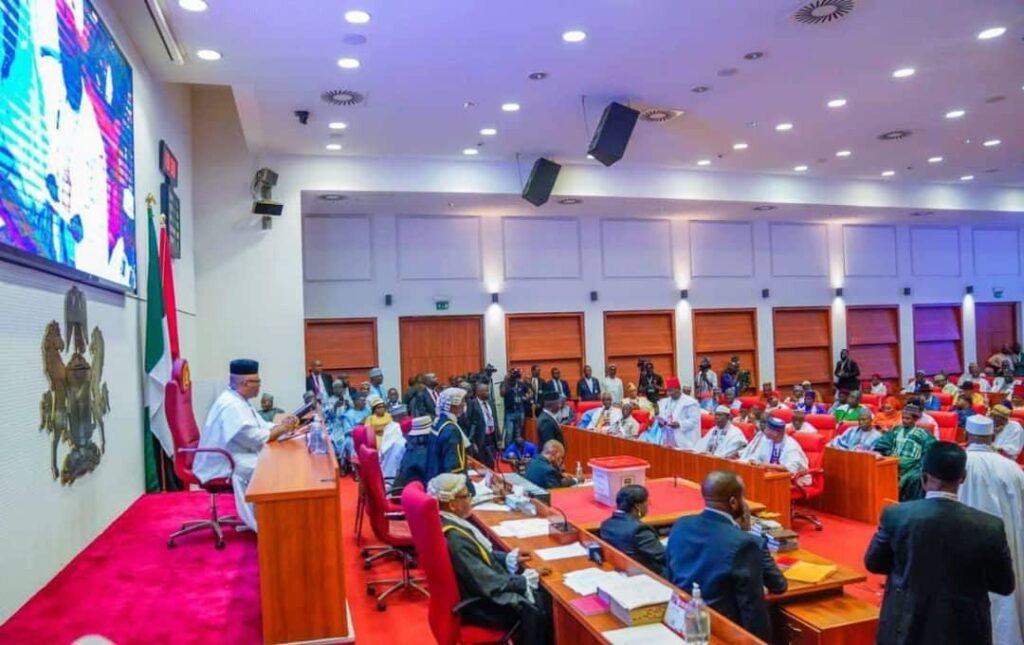
The 10th Senate, in marking its midterm anniversary, has unveiled its legislative focus for the next two years, with top priorities including electoral reforms, constitutional amendments, and a comprehensive overhaul of the judiciary.
In a statement commemorating the second legislative year of the 10th National Assembly, Senate Leader, Senator Opeyemi Bamidele, said the Senate had introduced a total of 983 bills – 506 of them in the 2024/2025 session alone – with 108 successfully passed into law between June 2023 and June 2025.
According to Bamidele, this milestone represents a significant legislative achievement, with a 232% increase in enacted bills compared to the previous session.
Bamidele said: “The 10th Senate has focused on stabilising Nigeria’s fiscal, monetary, and political environment through strategic legislative engagement. The legislative uptick is a testament to our commitment to national development.”
He listed landmark legislations such as the National Social Investment Programmes Act (2023), Student Loan (Access to Higher Education) Act (2024), National Minimum Wage Amendment Act (2024), Investment and Securities Act (2025), and the Regional Development Commission Establishment Acts (2025), among others.
Bamidele highlighted the Student Loan Act as a transformative tool for expanding access to higher education.
According to data from the Nigerian Education Loan Fund (NELFUND), over 1.09 million students have applied for support, with more than half already receiving tuition and upkeep loans.
Looking ahead, Senate Leader Opeyemi Bamidele reaffirmed the chamber’s commitment to prioritising electoral reform, constitutional amendments, and comprehensive judicial restructuring in the months to come.
“Our goal is to ensure that every vote truly counts and to restore public confidence in the electoral process. Credible elections are the backbone of any democracy,” Bamidele stated.
He also noted that several bills aimed at reforming the judiciary—particularly around the appointment, tenure, and welfare of judicial officers—are currently pending before the Senate.
Meanwhile, the Chairman of the Senate Committee on Finance, Senator Sani Musa, reiterated the Senate’s full support for President Bola Tinubu’s wide-ranging fiscal reform agenda, describing it as a crucial step toward addressing structural inefficiencies, simplifying tax compliance, and attracting foreign investment.
Speaking with journalists in Abuja over the weekend, Musa said, “We are optimistic that these reforms will put Nigeria on track to achieve a $1 trillion economy by the end of President Tinubu’s tenure.”
He explained that the proposed fiscal legislation seeks to harmonise Nigeria’s fragmented tax system—reducing the current 73 levies imposed by federal, state, and local governments—and will introduce tax exemptions for low-income earners.
“Anyone earning less than one million naira per year will now be exempt from paying personal income tax. This is a direct relief for low-income workers and small business operators,” he said.
Musa also confirmed that current VAT (7.5%) and corporate income tax (30%) rates will remain unchanged, maintaining fiscal stability while improving compliance.
“To boost revenue collection, all government income will now be channelled through a centralised system,” he added.
“We are actively sealing revenue leakages, especially in critical sectors like oil and gas, where inefficiencies have cost the country trillions of naira.”