Tinubu: Nigeria Remains Unfazed by Trump’s Tariffs and Trade Policies
Tinubu: Nigeria Remains Unfazed by Trump’s Tariffs and Trade Policies
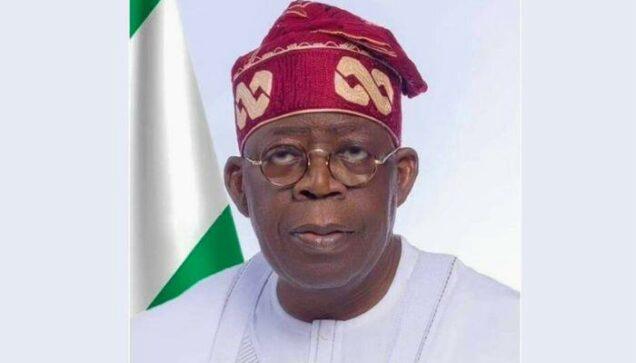
President Bola Tinubu on Tuesday said his administration will remain resilient and has no fear of the trade policy direction of U.S. President Donald Trump, particularly tariffs targeting Nigerian exports.
Tinubu made the remarks when he received in audience members of The Buhari Organisation led by former Governor of Nasarawa State, Sen.
Tanko Almakura, who paid him a solidarity visit at the Presidential Villa in Abuja.
The President cited Nigeria’s current economic trajectory and growing non-oil revenues as buffers against external shocks.
Tinubu said, “If non-oil revenue is growing, then we have no fear of whatever Trump is doing on the other side.”
He highlighted Nigeria’s strengthened fiscal position, having met its 2025 revenue target as of August, and noted a stabilisation in the naira, which has appreciated to around N1,450 per dollar from a previous rate of N1,900 after he unified the exchange rates upon assuming office in May 2023.
President Trump’s second term has ushered in sweeping changes to U.S. trade policy, including the imposition of a 10 per cent baseline tariff on nearly all imports, alongside country-specific levies.
In his Liberation Day trade policy announcements on April 2, 2025, Trump introduced unprecedented reciprocal tariffs under his “America First” agenda, aiming to rebalance trade deficits.
The policy included broad country-specific tariffs ranging from 11 per cent to 50 per cent on top of a 10 per cent baseline.
Nigeria, like many sub-Saharan partners, now faces a 15 per cent tariff on its exports, effective August 7, following an initial 14 per cent rate announced in April.
However, energy commodities, including oil and gas, have been exempted from the new tariff regime.
Nonetheless, reports show that heightened trade tensions and tariff imposition have already dampened energy product exports globally in early 2025, disrupting demand flows for crude oil, gasoline, and diesel.
Tinubu also pointed to progress on his administration’s agricultural reform agenda, citing a massive mechanisation programme across regions.
“If we remove hunger, we have defeated poverty,” he said, arguing that food security is key to Nigeria’s economic recovery.
Tinubu, meanwhile, reflected on the early days of the All Progressives Congress (APC), recalling how he and the late former President Muhammadu Buhari often clashed during the party’s formation—particularly over the choice of its logo.
Speaking on the 2013 merger talks that birthed the APC, Tinubu said: “We disagreed to agree. We even argued over the symbol—he (Buhari) wanted parliament, while I stood firmly on the broom. He was so stubborn,” he added, drawing laughter.
Tuesday’s gathering, which included prominent northern leaders such as Katsina State Governor Dikko Radda and former Governor Aminu Masari, is seen as a possible move to strengthen party unity ahead of the 2027 elections.
The APC was officially launched in February 2013 following the merger of four opposition parties: the Action Congress of Nigeria (ACN), the Congress for Progressive Change (CPC), the All Nigeria Peoples Party (ANPP), and a faction of the All Progressives Grand Alliance (APGA).
At the time, Tinubu, then National Leader of the ACN and former Lagos State Governor, was pivotal to the merger process, while Buhari led the CPC. Their contrasting political backgrounds often sparked disagreements before the Independent National Electoral Commission (INEC) approved the party’s registration.
Ultimately, the broom was chosen as the APC’s logo, representing unity and the fight against corruption and bad governance. The coalition later proved decisive, enabling the APC to end the People’s Democratic Party’s long reign in 2015 and bring Buhari to power.