Tinubu vetoes two National Assembly bills over policy conflict

Tinubu vetoes two National Assembly bills over policy conflict
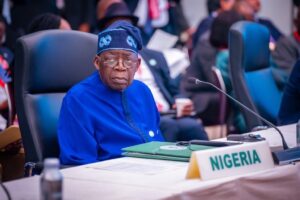
President Bola Tinubu has declined to sign two recently passed bills from the National Assembly, citing concerns that certain provisions could undermine fiscal discipline, conflict with existing laws, and set troubling precedents in public finance management.
The development was revealed in letters from the President, read by Senate President Godswill Akpabio during Tuesday’s plenary session.
The affected bills are the Nigerian Institute of Transport Technology (Establishment) Bill, 2025, and the National Library Trust Fund (Establishment, etc.) Amendment Bill, 2025.
While commending the overall intent of the proposed legislations, Tinubu noted that several sections were inconsistent with established fiscal and administrative frameworks of the federal government.
On the Transport Technology Bill, the President faulted provisions introducing new levies, unregulated borrowing, and investment of public funds in securities, moves he said could create opaque revenue channels and open avenues for misuse.
He particularly cited Section 18(4a), which proposed that the institute be funded through “one per cent of the freight on every import and export,” warning that the levy, introduced without Federal Executive Council approval, would overburden trade and sidestep the national budgetary process.
Tinubu also objected to Section 20, which empowered the institute to borrow up to N50m without presidential consent, describing it as “a loophole that could enable repeated borrowing below the threshold to evade oversight.”
Sections 21 and 23, which allowed the institute to invest government-appropriated funds, were equally criticised as “fiscally dangerous.”
“These provisions, if allowed, would not only undermine fiscal discipline but also create opportunities for financial abuse.”
For these reasons, I withhold my assent to the bill,” Tinubu wrote.
In a separate letter rejecting the National Library Trust Fund Amendment Bill, the President said that though the bill’s intentions were laudable, several sections clashed with existing federal laws and policy frameworks.
He cited provisions on agency funding, taxation of national entities, staff remuneration, and tenure or age limits as potentially “unsustainable and against the public interest.”
“For these reasons, I cannot grant presidential assent to the bill in its present form. I urge the Senate to revisit and address the identified issues,” the letter read.
After reading both correspondences, Akpabio commended Tinubu’s “diligence in reviewing every legislation” and directed relevant committees to rework the affected bills for further legislative action.”
“This reflects the diligence with which Mr. President reviews every piece of legislation we pass. It is now our duty to carefully address the concerns he has highlighted,” Akpabio stated.
Following his remarks, the Senate referred the Transport Technology Bill to the Committee of the Whole, while the National Library Trust Fund Amendment Bill was sent to the Committees on Special Duties and Establishment and Public Service Matters for further examination.
The President’s decision to withhold assent marks another example of the executive’s increasing scrutiny of legislative actions under the current administration.
The move also reinforces Tinubu’s commitment to strengthening fiscal discipline and ensuring that legislative proposals align with the broader economic reform objectives of his Renewed Hope agenda.