U.S. Considers Sanctions on Nigerian Officials Over Religious Persecution as Tensions Rise
U.S. Considers Sanctions on Nigerian Officials Over Religious Persecution as Tensions Rise
Twelve northern Nigerian governors, prominent traditional rulers, and senior judges are at the center of an emerging diplomatic controversy as the U.S. Congress considers a bill that could impose extensive sanctions on them. The legislation accuses these officials of complicity in what American lawmakers term a “Christian genocide” and systemic persecution linked to Nigeria’s sharia and blasphemy laws.
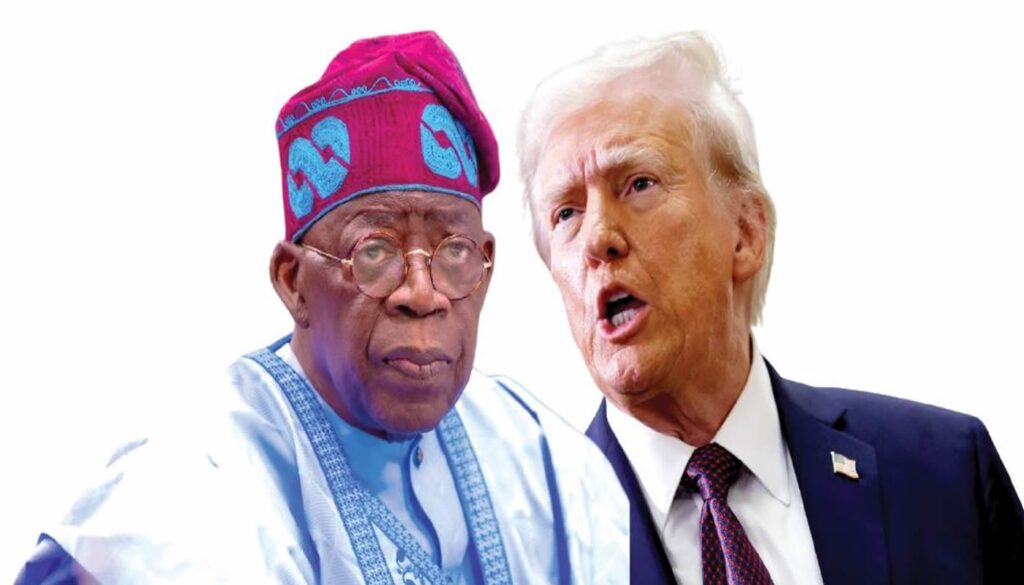
This development follows President Donald Trump’s designation of Nigeria as a “Country of Particular Concern” (CPC) for religious freedom violations, and his directive to the Secretary of State to act swiftly. Trump publicly lamented the ongoing killing of Christians in Nigeria, urging congressional leaders to investigate and report back on the situation.
The proposed Nigeria Religious Freedom Accountability Act of 2025, sponsored by Republican Senator Ted Cruz, would formally label Nigeria as a CPC for religious persecution. The bill calls for targeted sanctions against Nigerian officials—including governors, judges, and monarchs—accused of promoting or tolerating violence against Christians and religious minorities. It mandates that within 90 days of enactment, the Secretary of State submit a report listing officials involved in enforcing blasphemy laws or enabling violence justified by religion.
Under the bill’s provisions, sanctions such as visa bans, asset freezes, and financial restrictions could be applied under the Global Magnitsky framework. A key focus is on Nigeria’s implementation of sharia law, especially its expansion into criminal and public morality laws in northern states since 1999-2000, beginning with Zamfara under Governor Ahmad Sani Yerima. Today, about a dozen states— including Kano, Sokoto, Katsina, Borno, and others—have adopted sharia-based penal codes, creating parallel courts alongside secular legal systems. Other states, like Kogi and Benue, limit sharia to personal matters.
Recently, tensions have risen over efforts to introduce sharia arbitration panels in southern states such as Oyo and Ogun, sparking clashes between Christian and Muslim communities. The government emphasizes that Nigeria’s constitution maintains a secular framework, with sharia law applicable only to Muslim personal issues and not criminal law. Nigeria’s foreign ministry has stressed that the country does not enforce nationwide blasphemy laws nor persecute Christians, asserting that all faiths enjoy legal protections and religious freedom under the constitution.
However, concerns persist over reports of violence and discrimination against non-Muslims, including prominent incidents like the 2022 mob killing of Deborah Samuel in Sokoto over alleged blasphemy, and other cases of mob violence against individuals accused of blasphemy in Kano and Bauchi. Critics argue that vague laws and societal tensions have enabled mobs to take the law into their own hands, often with tragic outcomes.
Trump’s administration has accused Nigeria of endemic religious persecution, claiming thousands of Christians have been murdered since 2009 and many churches destroyed. The U.S. president warned that if Nigeria fails to curb these abuses, the U.S. might suspend aid and consider military interventions to combat terrorism and protect Christians, including potential strikes against Islamist groups like Boko Haram and ISIS-West Africa.
The draft legislation also signals a readiness for possible military action, with U.S. officials indicating that the Department of War is preparing for intervention if Nigeria does not protect its Christian communities. The bill would also maintain terror designations on Boko Haram and ISIS-West Africa, while imposing sanctions on Nigerian officials implicated in religious violence.
The Nigerian government has responded by stating that President Bola Tinubu plans to meet with U.S. officials, including President Trump, to address these issues and clarify misconceptions. Presidential spokespersons reaffirm Nigeria’s commitment to national security and religious harmony, emphasizing ongoing cooperation with international partners.
Analysts note that Nigeria’s constitutional guarantees of religious freedom and the legal limitations on sharia law have been consistent, with the government vehemently denying allegations of systemic persecution. Nonetheless, human rights groups and religious minorities continue to raise alarms over violence, harassment, and legal ambiguities surrounding blasphemy laws.
As Nigeria prepares for President Tinubu’s upcoming official visit to the U.S., diplomatic tensions over religious freedoms and human rights remain high, with both sides seeking dialogue to address the complex issues at play.