House of Reps Approves $347 Million Loan for Lagos-Calabar Coastal Highway and Other Projects
House of Reps Approves $347 Million Loan for Lagos-Calabar Coastal Highway and Other Projects
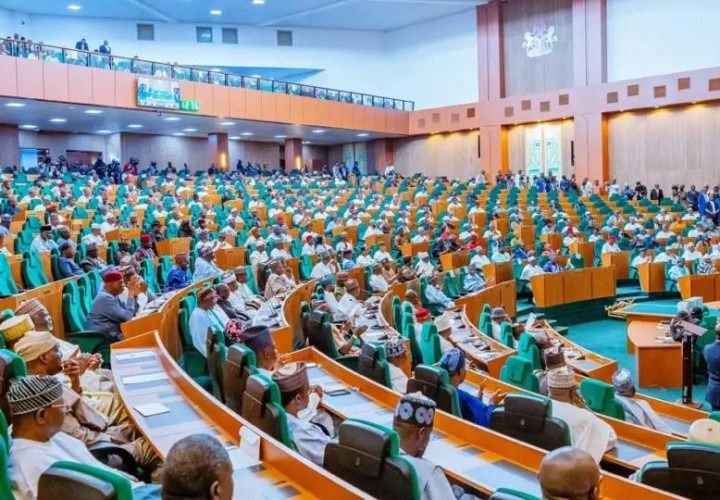
The House of Representatives on Wednesday approved President Bola Tinubu’s request to borrow $347 million as part of the 2025–2026 borrowing plan submitted to the National Assembly.
During plenary, Speaker Tajudeen Abbas read the President’s letter outlining the request on the floor of the Green Chamber.
In the correspondence, President Tinubu explained that the loan was needed to address increased funding requirements for the Lagos-Calabar Coastal Highway project, whose cost has risen by $47 million—from $700 million to $747 million.
He noted that at the time the borrowing plan was sent to the National Assembly, the lead arranger had secured only $700 million in financing commitments. The President added that the financing gap is now being filled through support from export credit agencies.
It is, therefore, necessary to increase the value of the financing for the project by $47m to ensure it aligns with the loan size agreed in the finance documents for the project,” the President said in the letter.
He noted that $300m is needed for the Nigerian universal communications access project, a landmark telecommunications initiative aimed at bridging the digital divide through the deployment of 7,000 telecommunications towers across hard-to-reach rural dwellings.
Recall that in May, Tinubu sought the approval of the parliament to approve the 2025-2026 borrowing plan of $21.54bn, €2.19bn and ¥15bn, in addition to a €65m grant.
With the additional $47 million allocated to the Lagos-Calabar Coastal Highway and $300 million earmarked for the Universal Communication Access Project, Nigeria’s total external borrowing plan has seen a slight increase—from the initial $21.54 billion to $21.89 billion.
During Wednesday’s plenary, the House of Representatives adopted the report presented by Abubakar Nalaraba, Chairman of the House Committee on Aids, Loans, and Debt Management.
Nalaraba noted that despite the rise in borrowing, Nigeria’s debt profile remains sustainable. He stated, “At over N145 trillion, our debt-to-GDP ratio is around 50 per cent, still below the international benchmark of 56 per cent.”
He added that the current administration has successfully reduced the country’s debt service-to-revenue ratio from over 90 per cent to under 70 per cent. According to him, the government’s capacity to manage the new debt is supported by expected revenue growth from the Nigerian Tax Act 2025, which is projected to rise by over 18 per cent annually starting in 2026.
Deputy Speaker Benjamin Kalu, who presided over the session after Speaker Tajudeen Abbas left midway, granted the final approval for the loan request.