Emergency Rule: Tinubu Reinstates Fubara — Who Gains, Who Loses
Emergency Rule: Tinubu Reinstates Fubara — Who Gains, Who Loses
Siminalayi Fubara is set to resume his duties today as Governor of Rivers State following the expiration of the six-month emergency rule declared by President Bola Tinubu.
President Tinubu, in a statement released by the Presidency on Wednesday, confirmed the end of the emergency rule imposed on March 18, 2025. He announced that Governor Fubara, Deputy Governor Ngozi Odu, Speaker Martins Amaewhule, and members of the Rivers State House of Assembly would return to their offices effective September 18, 2025.
“It gives me great pleasure to declare that the emergency in Rivers State of Nigeria shall end with effect from midnight today,” the President stated.
He added that intelligence reports indicated a renewed spirit of cooperation, understanding, and commitment among stakeholders in Rivers State toward restoring democratic governance. “This is a welcome development and a remarkable achievement for us. I, therefore, see no reason why the state of emergency should continue beyond the six months initially declared,” he said.
With this decision, democratic institutions suspended under the emergency rule—during which Vice Admiral Ibok-Ete Ibas served as Sole Administrator—have now been reinstated, allowing elected officials to resume full responsibilities from September 18.
The political crisis in Rivers State has been one of Nigeria’s fiercest power struggles in recent years, rooted in a battle between Fubara and his predecessor-turned-political godfather, Nyesom Wike, now Minister of the Federal Capital Territory.
When Fubara emerged as governor in May 2023, he was widely seen as Wike’s protégé. The relationship, however, turned sour over control of political structures, state resources, and loyalty ahead of the 2027 elections.
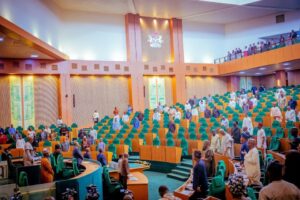
By late 2023, the crisis escalated as the state House of Assembly split, with the majority siding with Wike, while a minority remained loyal to Fubara.
Moves to impeach the governor triggered street protests, legal battles, and even violence as the Assembly building was set ablaze during the height of tensions, symbolising the depth of the political breakdown.
President Tinubu brokered a peace deal in December 2023, compelling Fubara to recognise the Amaewhule-led lawmakers who had declared their defection to the All Progressives Congress. The Abuja controversial agreement was criticised by many gladiators, describing it as unconstitutional.
Despite the truce, parallel legislative sessions, disputed budgets, and allegations of intimidation persisted. Both camps entrenched themselves further, drawing in national political forces and destabilising governance in the oil-rich state.
The height of the tensions was the February 28, 2025, judgment of the Supreme Court, which recognised the Amaewhule-led Assembly as the authentic in the state.
Hitherto, Fubara had recognised and given validity to the Victor Oko-Jumbo-led assembly.
The apex court also ordered the embattled governor to re-present the 2024 budget, while halting the release of funds by the Federal Government to the state.
It also declared the controversial local government election conducted by Fubara on October 5, 2024, as invalid and sacked the elected council chairmen.
The battle line was then drawn between Fubara and the Amaewhule-led Assembly, leading to heightened tension in the state.
The assembly, playing hide-and-seek, asked the governor to present the 2024 budget, even after the 2025 budget had been passed by the Oko-Jumbo three-man faction, though attempts by the governor to meet with the members failed.
As the tempers rose, locals and ex-agitators threatened to tamper with oil installations should Fubara be impeached, as threatened by the Amaewhule-led assembly in a notice sent to the governor.
A day before Tinubu imposed emergency rule, an explosion rocked a section of the Trans Niger Pipeline in the Bodo Community of Gonna Local Government Area in Rivers State. The following day, another explosion severed a pipeline manifold in the Omwawriwa axis of Ogba-Egbema-Ndoni Local Government Area of the State.
The President expressed concern over vandalism by militants, allegedly acting in support of Fubara. The attacks occurred amid desperate efforts by the Tinubu administration to increase Nigeria’s lagging crude oil output and curb leaks.
To forestall a breakdown of law and order and protect vital oil installations essential to uninterrupted production and the economy, President Tinubu, on March 18, 2025, declared a state of emergency in Rivers State and suspended all democratic institutions.
The declaration was faulted by civil society groups, opposition political parties, Rivers indigenes, especially women, but the President justified his intervention, saying he was constitutionally empowered to intervene to prevent breakdown of law and order.
In his Wednesday statement, Tinubu said, “You will recall that on March 18, 2025, I proclaimed a state of emergency in the State. The summary of it for context is that there was a total paralysis of governance in Rivers State, which had led to the Governor of Rivers State and the House of Assembly being unable to work together.”
He cited vandalism of “critical economic assets of the State, including oil pipelines,” and a split legislature in which “four members worked with the Governor, while 27 members opposed the Governor…As a result, the Governor could not present any Appropriation Bill to the House, to enable him to access funds to run Rivers State’s affairs.”
Tinubu said attempts by himself and “other well-meaning Nigerians” to broker peace failed, prompting him “to invoke the powers conferred on me by Section 305 of the 1999 Constitution, as amended, to proclaim the state of emergency.”
He noted that “the offices of the Governor, Deputy Governor, and elected members of the State House of Assembly were suspended for six months in the first instance. The six months expire today, September 17, 2025.”
President Bola Tinubu expressed gratitude to lawmakers for endorsing the state of emergency in Rivers, acknowledging their swift approval in line with constitutional provisions. He also commended traditional rulers and the people of Rivers State for their cooperation throughout the six-month period.
Addressing the legal challenges that arose, Tinubu noted that over 40 cases were filed in Abuja, Port Harcourt, and Yenagoa to contest the proclamation. However, he stressed that declaring a state of emergency was a constitutional necessity in response to the breakdown of public order and safety. Citing the Supreme Court’s ruling on disputes between Rivers’ executive and legislative arms, he maintained that failing to act would have amounted to dereliction of duty.
The President called for harmony between government branches, cautioning that governance cannot thrive in an environment of violence, anarchy, and political manipulation. He acknowledged that reconciliation among factions had restored stability, describing it as a “new spirit of understanding, readiness, and enthusiasm for democratic governance.”
Declaring the emergency officially ended, Tinubu said: “It therefore gives me great pleasure to declare that the emergency in Rivers State of Nigeria shall end with effect from midnight today.”
He concluded by urging all governors and state assemblies to prioritise peace and good governance, reminding them that only in an atmosphere of order can the dividends of democracy be delivered to Nigerians.