FG Steps In to Prevent Fuel Supply Disruption, Assures Stability
FG Steps In to Prevent Fuel Supply Disruption, Assures Stability
The Federal Government on Sunday reassured Nigerians that the supply of refined petroleum products would remain uninterrupted, amid concerns over the Naira-for-crude oil arrangement and disputes involving the Dangote Refinery.
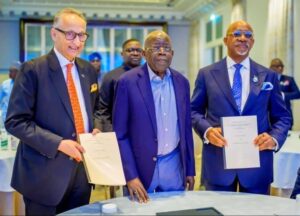
In a statement released by the Ministry of Finance after a meeting of the Steering Committee on the Domestic Crude Oil and Refined Products Sales in Local Currency Initiative, the government emphasized that safeguarding energy security and ensuring stability in the downstream sector remain top priorities.
The committee, chaired by the Minister of Finance and Coordinating Minister of the Economy, Wale Edun, clarified that recent reports suggesting the suspension of the Naira-for-crude deal with the Dangote Refinery had been “amicably resolved.”
“For the avoidance of doubt, the committee reaffirms that the crude-for-Naira initiative will continue. It also assured that all pending issues—particularly the dispute between the Petroleum and Natural Gas Senior Staff Association of Nigeria and Dangote Refinery—are being handled with urgency and in good faith,” the statement added.
Also present at the meeting were the Minister of Budget and Economic Planning, Senator Abubakar Atiku Bagudu; the Chairman of the Federal Inland Revenue Service, Mr. Zacch Adedeji, who also chairs the Technical Committee; representatives of the Nigerian Midstream and Downstream Petroleum Regulatory Authority, the Nigerian National Petroleum Company Limited, the Central Bank of Nigeria, Afreximbank, and the Dangote Refinery.
The government insisted that Nigerians should not expect scarcity or price instability.
“The Federal Government remains fully committed to ensuring energy security, protecting consumers, and maintaining stability in the domestic petroleum products market,” the statement noted.
By addressing labour concerns and reaffirming the continuity of its local currency crude oil sales initiative, the committee sought to ease growing public fears of another fuel crisis.
The Dangote Refinery, in a memo sent to marketers on Saturday, confirmed it had resumed the sale of fuel in naira, attributing the decision to the intervention of the naira-for-crude technical committee.
“Following the intervention of the Naira for Crude Technical Committee Chairman, we are pleased to inform you of the resumption of PMS sales in Naira commencing immediately.
“You may kindly proceed to place your orders in naira for both self-collection and free delivery of PMS to the earlier advised locations across the country. Thank you for your continued patronage,” the memo read.
In an earlier memo on Friday, the refinery announced the suspension of petrol sales in naira, effective from Sunday, September 28, 2025, citing the exhaustion of its crude-for-naira allocation as the reason.
However, the intervention of the Federal Government committee in charge of the naira-for-crude deal was said to have resolved the differences.
The Petroleum and Natural Gas Senior Staff Association of Nigeria (PENGASSAN) has directed its members nationwide to withdraw their services following the alleged mass dismissal of over 800 Nigerian workers by the Dangote Refinery.
In a circular issued after an emergency National Executive Council (NEC) meeting on Saturday, September 27, 2025, and signed by General Secretary Lumumba Okugbawa, the union accused the refinery of breaching Nigeria’s labour laws, the Constitution, and International Labour Organisation conventions by sacking workers for joining the association.
The NEC further alleged that the refinery replaced the dismissed staff with “over 2,000 Indians,” describing the move as “an affront to all Nigerian workers.”
To press its demands, PENGASSAN ordered members in field locations to down tools starting Sunday and declared a nationwide shutdown across offices, companies, institutions, and agencies beginning Monday.
It also announced plans for 24-hour prayer vigils and called for urgent government intervention, vowing that the strike would continue until the sacked workers were reinstated.
However, with the Federal Government’s intervention, there are indications the strike could be suspended.