Political Realignment in Kano Could Reshape Emirate Power Dynamics, Experts Say.
Political Realignment in Kano Could Reshape Emirate Power Dynamics, Experts Say.
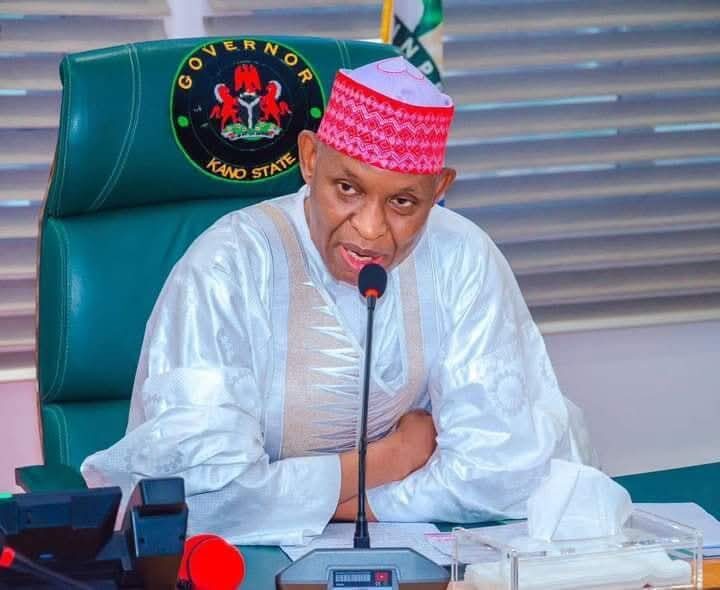
The rumored plan of Kano State Governor Abba Kabir Yusuf to defect to the All Progressives Congress (APC) has sparked fresh concerns over the long-standing and sensitive emirship crisis in Kano. This development has the potential to reignite deep-rooted tensions within the state’s traditional and political spheres, especially concerning the rivalry between Emir Muhammadu Sanusi II and the 15th Emir, Aminu Ado Bayero.
The political atmosphere in Kano is highly volatile, with the possibility that Yusuf’s defection might alter the fragile power equilibrium. The crisis dates back to 2020 when then-Governor Abdullahi Ganduje, also from the APC, dethroned Sanusi and installed Bayero following the passage of the Kano State Emirate Council (Repeal) Law 2024. Sanusi’s supporters saw his reinstatement by Yusuf’s administration in 2023 as corrective justice, but critics argued it was an overreach, fueling ongoing tensions. Bayero, refusing to accept his removal, returned to his residence at Nassarawa Palace and challenged the removal legally, further complicating the crisis.
Analysts and political observers warn that Yusuf’s move to join APC could significantly impact the emirship dispute, potentially weakening Sanusi’s position and strengthening Bayero’s claim. Supporters of Bayero view the development as an opportunity for renewed legal and political contests, while Sanusi’s loyalists fear increased vulnerability for the Emir, especially given his current limited security protection.
Security experts like Sumner Sambo have expressed concern that such political shifts could deepen the crisis, threatening stability in Kano. Sambo warned that if Yusuf defected, it might lead to a realignment that favors Bayero’s reinstatement, a move that could trigger security challenges and political unrest. He emphasized the importance of federal authorities exercising caution, as Kano remains a highly volatile state.
Meanwhile, experts like Nduka Odo highlighted that the emirship crisis underscores systemic failures within Nigeria’s judicial and political systems. He argued that the prolonged dispute is a reflection of Nigeria’s inability to resolve sensitive issues swiftly, with the judiciary often failing to deliver timely justice. Odo warned that the uncertainty fosters influence by political actors and that traditional institutions’ survival increasingly depends on political alignments.
Civil Rights advocate Olu Omotayo criticized the judiciary for its slow handling of the case, noting that the prolonged dispute undermines governance and security in Kano. He called for urgent judicial intervention, emphasizing that the existence of two emirs in Kano is abnormal and destabilizing. Omotayo urged reforms within Nigeria’s judicial system to prevent such crises and ensure justice is timely and impartial, regardless of political developments.