Government Urges Stakeholders to Support Harmonization of Corporate Ownership Records.
Government Urges Stakeholders to Support Harmonization of Corporate Ownership Records.
The Corporate Affairs Commission (CAC) of Nigeria has called for the unification and centralization of the country’s beneficial ownership registers to bolster efforts against illicit financial activities, including money laundering, corruption, and tax evasion. This initiative aims to create an interconnected system that simplifies the identification of individuals who ultimately own or control companies operating within Nigeria.
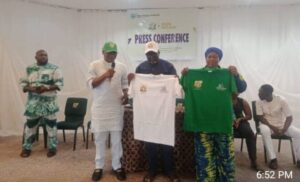
During a training session on the Beneficial Ownership Register held in Abuja, Hussaini Ishaq Magaji, the Registrar-General and CEO of CAC, emphasized the need for a coordinated national framework. Currently, beneficial ownership information is fragmented across various institutions—such as the Nigeria Export Processing Zones Authority (NEPZA), Nigeria Extractive Industries Transparency Initiative (NEITI), and the CAC itself—making it difficult to get a comprehensive view of corporate control and ownership.
Magaji explained that the goal is not to diminish the responsibilities of these agencies but to connect their data sources. “It’s about ensuring that the Nigerian beneficial ownership ecosystem speaks with one voice, one standard, and one level of transparency,” he said. The fragmentation hampers transparency and accountability, especially for companies operating across different sectors and regulatory environments. An integrated system would enable authorities, journalists, and civil society to access complete and accurate information about corporate ownership structures.
The CAC currently maintains a Beneficial Ownership Register, which shares similar objectives with other frameworks like the Nigeria Export Processing Zones Authority and NEITI. These systems collectively aim to identify the natural persons behind corporate entities—answering fundamental questions such as “Who owns this company?” and “Who benefits from it?” Magaji stressed that much of this information is stored within the CAC’s registry, and improving coordination among agencies is crucial.
The Registrar-General urged journalists and civil society organizations to advocate for interoperability, standardized data, and better access to beneficial ownership information, all while respecting privacy rights. He emphasized that transparency is not merely bureaucratic but vital for holding corporations accountable and safeguarding public resources. Access to this data is free, and CAC encourages its use to strengthen investigations into corporate misconduct.
Furthermore, Nigeria plans to host a Global Conference on Beneficial Ownership in Lagos on November 8, 2026. The event will gather around 200 delegates from 43 countries to review Nigeria’s progress since its commitments at the London Anti-Corruption Summit and to discuss strategies for further enhancing transparency and data interoperability.
Magaji concluded by highlighting that the real success of Nigeria’s beneficial ownership register will depend on how effectively its information is used to detect abuse and promote accountability. The framework for disclosure, under the Persons with Significant Control Rules, mandates transparency about individuals with substantial control or ownership, aligning Nigeria’s efforts with international best practices. The move towards a unified, accessible, and transparent beneficial ownership system is seen as a critical step in combating illicit financial flows and promoting good governance in Nigeria.