Building Collapse in Enugu Exposes Grave Negligence, Calls for Comprehensive Urban Planning Reforms.
Building Collapse in Enugu Exposes Grave Negligence, Calls for Comprehensive Urban Planning Reforms.
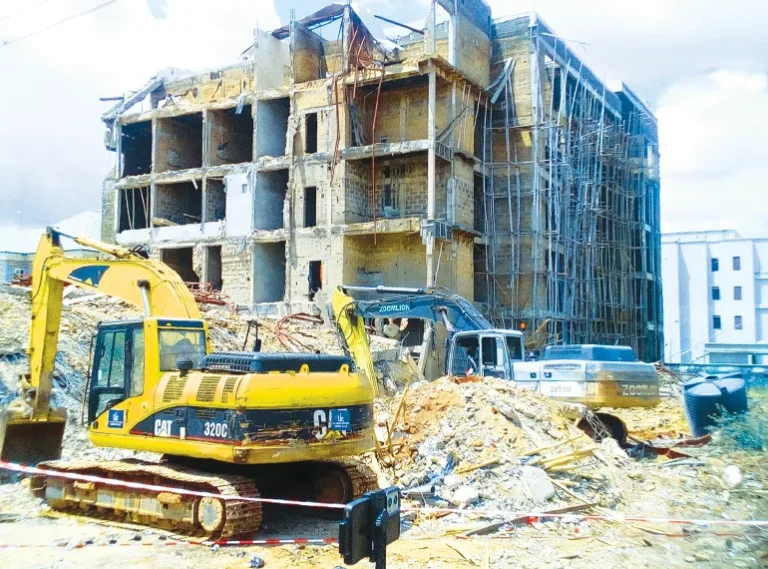
Experts have attributed the tragic collapse of a four-story building in Enugu to negligence and institutional failure, raising serious concerns about urban planning and construction standards in the region. The incident occurred on Sunday, resulting in one death, a critically injured victim, and several others hospitalized. By Monday morning, officials from Nigeria’s leading built-environment institutions visited the site to assess the damage and identify the underlying causes.
The site, littered with shattered concrete, exposed rebar, and personal belongings, was a stark reminder of the dangers posed by unregulated construction practices. Leaders from the Nigerian Institute of Town Planners (NITP) and the Nigerian Institute of Building (NIOB) condemned the collapse, emphasizing the role of negligence and lack of professional oversight. Dr. Christopher Anierobi, NITP Enugu State Chairman, stated, “This collapse is a result of gross negligence. The materials used were inadequate, and there was a complete failure of professional supervision.” Similarly, Dr. Eucharia Enebe of NIOB pointed out that structural failure begins long before concrete is poured, highlighting the absence of basic quality management, safety protocols, and construction oversight.
Beyond immediate human error, experts identified a deeper institutional problem: Enugu’s urban development is based on outdated planning frameworks. The city’s development is currently guided by a 1979 master plan, drafted during Chief Jim Nwobodo’s administration, which is no longer suitable for contemporary needs. Both Anierobi and Chukwunoso urged the state government to adopt modern planning laws, including the 1992 Nigerian Urban and Regional Planning Law and the 2006 National Building Code. They argued that formal adoption and enforcement of these laws would allow regulatory bodies to restrict site supervision to licensed professionals—architects, structural engineers, and registered builders—thereby reducing the risk of substandard construction driven by revenue motives.
Attention was also directed toward an adjacent building that remained standing after the collapse. Experts warned that the shockwave from the incident might have compromised its structural integrity. Prof. Enebe emphasized the need for comprehensive integrity tests before deeming it safe for occupancy.
The Enugu Capital Territory Development Authority (ECTDA) had previously issued a statement confirming that the developer had obtained approval for the structure. However, investigations revealed significant deviations from approved plans, densification violations, and unmonitored modifications during construction. The agency has sealed the site, launched an administrative inquiry, and promised prosecution of those responsible for regulatory breaches.
As rescue efforts conclude and investigations progress, the consensus among professionals is clear: mere condolences and post-disaster panels are insufficient. Urgent reform of urban planning laws and stricter enforcement of building codes are vital to prevent future tragedies. Without these measures, Enugu risks repeating the cycle of avoidable structural failures that threaten lives and property.